17 Best Dropshipping Suppliers in 2026 (China, US & EU Compared)
A side-by-side comparison of 17 dropshipping suppliers for 2026 across China, the US, and the EU — scored on delivery speed, warehouse locations, MOQ, branding, and Shopify/TikTok Shop automation. Plus a 6-step framework to pick the right partner.

Winning dropshipping suppliers in 2026 are judged on five factors—delivery speed, warehouse locations, MOQ, branding/customization, and Shopify/TikTok Shop automation—not price alone.
The 11 suppliers split into clear use-cases: low-cost testing (AliExpress, DHgate), all-in-one scaling (CJdropshipping, FFOrder), US/EU local & premium (Spocket, Zendrop, Modalyst), and print-on-demand/branding (Printful)—so match the supplier to your stage.
For sellers moving from product testing to brand-building, a supply-chain partner with no MOQ, custom packaging, overseas warehouses, and dedicated account management (e.g., FFOrder) protects margins and delivery experience better than a pure marketplace.
What you'll get from this guide: A side-by-side comparison of 11 dropshipping suppliers for 2026 across China, the US, and the EU — scored on delivery speed, warehouse locations, MOQ, branding, and Shopify/TikTok Shop automation. Plus a 6-step framework to pick the right partner and avoid the most expensive supplier mistakes new sellers make.
Welcome to online commerce in 2026. If your business still relies on slow, outdated fulfillment, you risk falling behind.
Today’s customers expect fast shipping, good packaging, and reliable service, much like what Amazon Prime offers. Choosing dropshipping suppliers is no longer just about finding the lowest price. Successful sellers now look for quick delivery, international warehouses, custom branding, and easy automation with platforms like Shopify and TikTok Shop.

2026 Dropshipping Suppliers Comparison Matrix
Picking the right dropshipping supplier or logistics partner is key to growing your business smoothly. This guide compares top platforms by delivery speed, automation, branding options, warehouse locations, price, and reliability. Knowing these factors will help you quickly find the best supplier for your needs.
The 9 best dropshipping suppliers in China
AliExpress
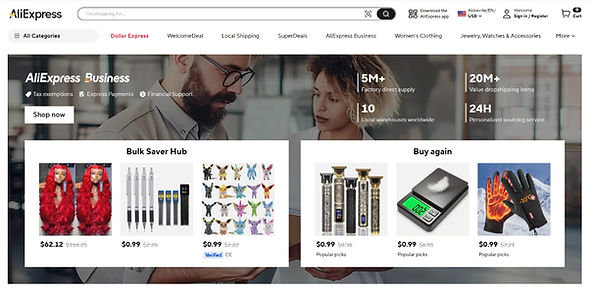
AliExpress is a longstanding and popular Chinese marketplace for dropshipping. It brings together thousands of suppliers offering products in almost every category and allows for single-item shipping, making it an accessible choice for those new to the business.
Pros
- Extensive product range: Access to over 100 million items in almost every major consumer category. (TopDawg, 2025)
- No minimum order requirement: Ideal for new sellers who want to avoid inventory risks.
- Buyer protection: Guarantees and dispute resolution services help reduce potential losses.
- App integration: Compatible with DSers and other dropshipping tools to automate product imports and order processing.
Cons
- Inconsistent quality: Product standards vary by supplier, so it's important to test items before selling.
- High competition: Top-selling products often lead to price wars.
- Slow shipping: Standard delivery from China usually takes 2–6 weeks, and can be longer during busy seasons.
- Delayed support: Customer service response times may be slow.
Fees
The platform does not charge a specific dropshipping “service fee,” but costs include product prices, shipping, and platform transaction fees (payment gateways). Third-party automation tools may have subscription fees.
Best for: Beginners testing products or running small test orders.
CJdropshipping
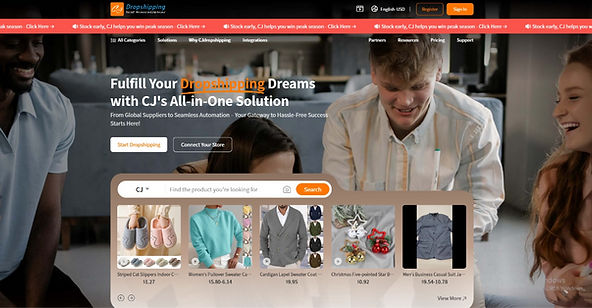
CJdropshipping is an all-in-one platform that manages sourcing, warehousing, fulfillment, customization, and system integration. Its primary advantage is streamlining the product sourcing and shipping process, reducing reliance on multiple suppliers.
Pros
- Overseas warehouse networks in multiple countries, helping shorten delivery times.
- Supports custom packaging, POD (print-on-demand) for brand-building needs.
- Deep integration with Shopify, TikTok Shop, and other major eCommerce platforms for highly automated order processing.
- Platform-centric workflow: pricing, custom requests, and order management can all be handled within the system.
Cons
- The platform has many modules, so beginners may face a learning curve.
- Customization and POD requests must follow standardized procedures, limiting flexibility.
- In peak seasons or promotions, shipping times and customer service responsiveness may fluctuate.
Fees
CJ provides shipping rate tables by country and shipping method, permitting sellers to estimate logistics costs in advance.
A free account is available with limited features, while full services require a paid monthly membership (Plus, Prime, or Advanced).
Ideal for
CJdropshipping suits growing store owners, sellers who need brand packaging/customization services, and those willing to stock in overseas warehouses for faster delivery and a better customer experience.
FFOrder
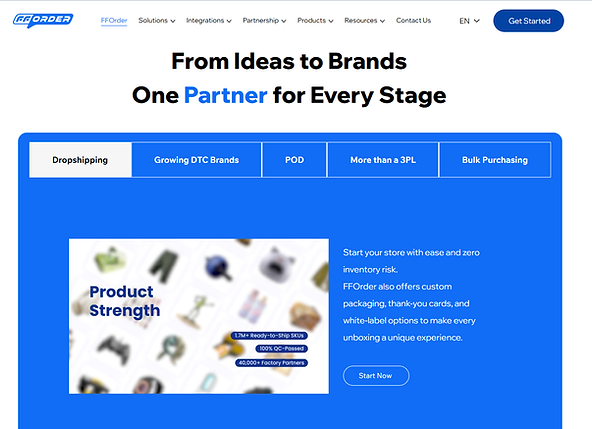
FFOrder is a supply-chain–focused dropshipping platform founded in 2017. Instead of operating as a product marketplace, it offers end-to-end operational support across sourcing, customization, warehousing, and order fulfillment—designed for dropshipping sellers who want greater control over product quality, delivery performance, and brand presentation as their business grows.
Pros
- 670,000+ SKUs: Covers popular AliExpress products and direct factory items, with no MOQ.
- Strong supplier network: 4,000+ suppliers, 500+ deep-partnership factories, supporting OEM/ODM (custom production).
- Integration: Connects with Shopify, WooCommerce, TikTok, and more for automated order processing and omnichannel management.
- Branding & customization: Private-label, custom packaging, on-demand printing.
- Own warehouses: Yiwu, Dongguan, Zhengzhou; 13,000+ m² for private inventory and reliable fulfillment.
- Dedicated account managers: One-on-one support for sourcing, pricing, logistics, and operations.
Cons
- Brand recognition is growing but less known than AliExpress or CJdropshipping.
- May be overkill for sellers focused only on low-cost, high-volume testing.
Fees
FFOrder does not charge platform usage or fixed service fees. Sellers cover actual order costs, like product costs, shipping, and taxes. OEM/custom projects may incur mold/sample fees.
Best for
Sellers moving from testing to brand-building, DTC brands, and teams needing custom packaging, fulfillment efficiency, and supply chain stability.
Also suitable for larger teams or mature sellers relying on private inventory and seeking professional 3PL support to enhance delivery experience.
Banggood
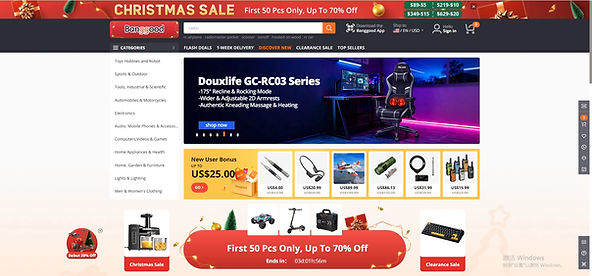
Banggood is a Chinese e-commerce platform featuring a dedicated Dropship Program. It is recognized for electronics, home goods, and outdoor products. With warehouses in China, Hong Kong, the US, Europe, and Australia, Banggood can offer faster shipping for select products. (Banggood Dropship Program - All Products List, n.d.)
Pros
- Wide product range, with particular strength in electronics, tools, and niche categories.
- Overseas warehouse resources can speed up delivery for fast-moving products.
- Provides exclusive dropshipping programs and pricing support.
- Long-standing platform with a mature supply chain and reliable inventory.
Cons
- Not all product categories are covered by overseas warehouses; many still ship from China.
- System integration and order automation are less advanced compared to platforms such as CJdropshipping or FFOrder.
- Limited branding/customizing options.
Ideal for
Banggood is a good choice for small to medium sellers who need a wide range of products, especially in electronics, home goods, or outdoor items. It’s also helpful for those who want faster delivery using overseas warehouses.
DHgate
DHgate originated as a B2B wholesale platform in China, connecting manufacturers and wholesalers. While not primarily focused on dropshipping, some suppliers offer small-batch or single-item shipping, making it a potential backup source for certain sellers.
Pros
- Large supplier and inventory scale, covering traditional B2B wholesale and small-batch purchasing.
- Strong selection in niche categories like industrial supplies and mechanical parts.
- Potential for price negotiation on bulk orders.
Cons
- Shipping methods and logistics vary across suppliers; not all suppliers support dropshipping.
- A large number of suppliers with varying quality; some products may carry infringement risks.
- No unified order automation or fulfillment system; overall experience is closer to traditional procurement.
Fees
DHgate charges transaction or platform service fees according to its rules and supplier settings. Dropshipping is not standardized; whether suppliers offer single-item fulfillment and at what cost depends on the individual supplier.
Ideal for
DHgate is best for sellers looking for low-cost, large-scale purchases, B2B buyers, or those after niche products. It’s better as a backup source than as your main dropshipping platform.
LightintheBox
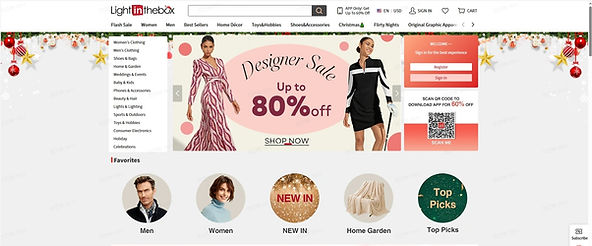
LightInTheBox is a China-based cross-border eCommerce platform serving international markets, with a strong emphasis on apparel, wedding dresses, formal wear, and home decor. Some sellers utilize it for dropshipping fashion products.
Pros
- Rich selection of apparel and specialty items, including wedding dresses, formal wear, and home decor.
- Supports worldwide shipping and multiple payment options.
Cons
- Shipping times vary widely: cheaper options may take 3–45 days.
- Apparel sizing tends to follow Asian standards, resulting in higher return rates.
- Limited branding options, such as private labeling or custom packaging.
Fees
Dropshipping sellers typically pay product cost + shipping, while custom services or returns follow LightInTheBox’s corresponding fee rules.
Ideal for
LightInTheBox is ideal for sellers in apparel, wedding or formal wear, or event merchandise, and for anyone who needs quick access to a wide range of fashion products.
Jingsourcing
Jingsourcing operates primarily as a China-based sourcing company rather than a dropshipping platform. Its core services include connecting sellers with factories, negotiating prices, conducting quality checks, managing custom production, and coordinating logistics.
Pros
- Professional sourcing for factories, pricing, quality, and custom orders.
- Experienced in complex customization, OEM/ODM, small-batch production, and quality control.
- Provides customized logistics solutions and pre-shipment inspections based on order requirements.
Cons
- Cost structure is project-based, generally higher than that of lightweight dropshipping platforms.
- Lead times depend on factory schedules for production or deep customization, making delivery times less predictable.
Fees
Jingsourcing offers clear service plans (e.g., Basic, Pro), usually with a minimum service fee or order threshold (Basic plan minimum ~$100). (Our Services, 2026) Costs are typically project-based rather than per-item dropshipping fees.
Ideal for
Jingsourcing is best for mid-to-high-end sellers who want to build a brand, need high quality and customization, and plan to order in bulk or set up long-term supply chain partnerships.
Global Sources
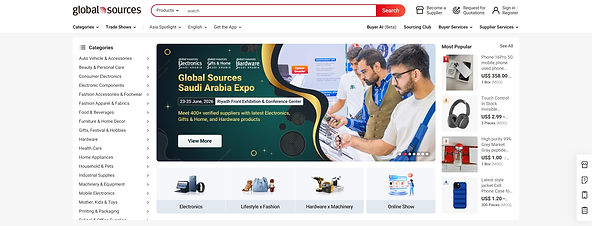
Global Sources is a B2B platform connecting international buyers with Chinese manufacturers. It primarily serves brands, wholesalers, and professional buyers, emphasizing direct factory sourcing and long-term partnerships rather than standard dropshipping.
Pros
- Certified factories, offering higher quality than typical C2C platforms.
- Focus on mid-to-high-end and differentiated products, helping sellers find items with competitive barriers.
- Industry recognition and offline trade show resources boost trust.
Cons
- No unified fulfillment, warehousing, or automated order system.
- Not designed for dropshipping, prefer bulk orders.
- Shipping and delivery schedules are controlled by factories.
Fees
Global Sources primarily acts as a matchmaking and trade show platform and typically does not charge dropshipping service fees. Purchase and transaction costs (MOQ, sample fees, production, shipping) are negotiated directly between buyer and supplier.
Ideal for
Global Sources is best for brand owners and bulk buyers who want to build a long-term, reliable supply chain. It’s not ideal for frequent dropshipping.
Chinabrands
Chinabrands is a Chinese supply chain platform offering both dropshipping and wholesale services. With a broad product selection and warehouses in the US, UK, and France, it enables faster order fulfillment for sellers. (Sam, 2025)
Pros
- Rich SKU selection and overseas warehouse network to shorten delivery times.
- Multi-platform support (Shopify, eBay, Amazon) with automated order processing.
- No MOQ: good for testing products.
Cons
- Product information standardization is limited; quality verification is the seller’s responsibility.
- Shipping and inventory updates can fluctuate.
- Limited branding/customizing options.
Fees: Product + shipping; overseas warehouse services billed separately.
Chinabrands is ideal for cross-border sellers who need faster delivery through overseas warehouses, and for small to medium sellers testing products or offering a wide range of listings.
US/EU Local & Premium Sourcing
Spocket
Spocket is a dropshipping platform connecting sellers with suppliers in the US and EU. By emphasizing local fulfillment and a curated product selection in categories such as fashion, beauty, and home goods, it provides faster shipping and an improved customer experience.

Pros
- Access to US/EU suppliers with faster delivery times.
- High-quality, curated product catalog suitable for premium positioning.
- Effortless integration with Shopify, Wix, and WooCommerce.
Cons
- Higher product costs compared to China-based suppliers.
- Limited SKU variety compared to global marketplaces.
- Requires subscription for full access.
Fees: Free to browse the catalog, but selling requires a paid subscription. Plans start at $39.99/mo (Starter) and $59.99/mo (Pro), with annual discounts available.
Spocket is best for sellers targeting the US or EU markets who want faster shipping, higher product quality, and a more premium direct-to-consumer brand experience.
Zendrop
Zendrop is an all-in-one dropshipping platform designed to simplify sourcing, fulfillment, and automation. It collaborates directly with suppliers and manufacturers, providing sellers with greater control over product quality and shipping times.

Pros
- Automated fulfillment with quicker processing times.
- Custom branding and private label support available.
- Product sourcing service for winning products.
Cons
- Limited supplier transparency relative to open marketplaces.
- Advanced features require paid plans.
- The product range is smaller than that of AliExpress-based platforms.
Fees: Free plan for basic browsing. Operational plans cost $49/mo (Pro) or $79/mo (Plus).
Zendrop is a good fit for sellers who want to scale up with more control over fulfillment, branding, and logistics.
Modalyst
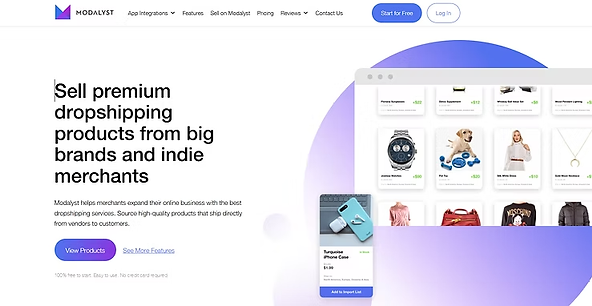
Modalyst is a dropshipping platform connecting sellers with both branded and independent suppliers, primarily in the US and EU. It focuses on higher-quality products and expedited local shipping.
Pros
- Name Brand Access: Allows sellers to list and sell verified, authentic designer brands (e.g., Calvin Klein).
- Global Return Policy: Offers a transparent 14-day return policy, lowering the high after-sales risks typical in the apparel category.
Cons
- High Transaction Fees: In addition to monthly fees, the free and basic tiers take a 5% transaction cut per order.
- Niche Limitations: Extremely vertical. If you are not selling fashion, beauty, or jewelry, this platform delivers little value.
Fees
- Hobby (Free, max 25 products), Start Up ($35/mo), Pro ($90/mo, unlocks unlimited products and premium suppliers).
Best for
- Modalyst is best for boutique store owners in the high-end fashion niche who are looking to leverage brand names to drive traffic.
Directories, Marketplaces, & Automation Tools
SaleHoo
SaleHoo is a directory and research tool providing access to trusted suppliers worldwide. It assists sellers in finding reliable partners but does not manage fulfillment.

Pros
- Access to verified suppliers and wholesalers.
- Strong product research and market insights tools.
- Suitable for long-term supplier relationship building.
Cons
- No built-in fulfillment or automation system.
- Requires manual supplier communication and management.
- Limited direct integrations.
Fees: Directory access is $9/mo (billed annually) or a $299 lifetime fee, with zero transaction cuts. The dropship automation tool is billed separately.
SaleHoo is ideal for sellers who want to focus on finding suppliers, researching niches, and building long-term supply chain partnerships.
DSers
DSers is the official dropshipping partner for AliExpress. It automates product sourcing and order fulfillment, making bulk ordering and supplier management easier.
Pros
- Direct integration with AliExpress for massive product access.
- Bulk order processing and automation features.
- No upfront cost for basic usage.
Cons
- Quality and shipping depend on individual AliExpress suppliers.
- Longer shipping times compared to local fulfillment options.
- Limited branding capabilities.
Fees: Basic (Free); advanced plans include Advanced ($19.90/mo) and Pro tiers.
DSers is great for beginners and sellers who want to test products quickly without spending much upfront.
Doba
Doba is a dropshipping marketplace that consolidates multiple suppliers on a single platform. It streamlines sourcing and order management, eliminating the need to manage each supplier individually.

Pros
- Centralised platform for multiple suppliers.
- Simplified inventory and order management.
- Easy setup for beginners.
Cons
- Subscription required for access.
- Product pricing can be higher than direct sourcing.
- Limited control over supplier selection.
Fees: Charges high monthly or annual subscription fees, with strict tier-gating (lower tiers do not get the most competitive product pricing).
Doba is best for sellers who want an all-in-one sourcing solution and don’t want to manage lots of supplier relationships.
Worldwide Brands
Worldwide Brands is a wholesale directory providing sellers with access to certified and trusted suppliers. It is designed to connect users with genuine wholesalers for long-term sourcing.

Pros
- Access to certified and reliable suppliers.
- One-time payment model (no recurring fees).
- Suitable for wholesale and large-scale purchasing.
Cons
- No automation or fulfillment services.
- Requires manual supplier communication.
- Not optimized for fast dropshipping workflows.
Fees: A one-time, lifetime membership fee of $299.
Worldwide Brands is ideal for sellers who want to focus on wholesale sourcing and build stable, long-term supplier relationships.
Customization & Print-On-Demand
Printful
Printful is a print-on-demand platform that handles product customization, production, and fulfillment. It enables sellers to offer branded products without holding inventory.

Pros
- No inventory required with on-demand production.
- Strong branding and personalization capabilities.
- Global fulfillment network for faster delivery.
Cons
- Greater per-unit cost versus bulk manufacturing.
- Limited to print-on-demand product categories.
- Profit margins depend on pricing strategy.
Fees: No subscription fees or MOQs. You only pay the "production cost + shipping" when an order is placed on your store.
Printful is best for brands that want to offer custom products, merchandise, and build a strong branded online store.
China vs. US/EU Dropshipping Suppliers: How to Choose in 2026?
Many e-commerce entrepreneurs question whether to source products locally in the US or EU, or to purchase from overseas suppliers in China.
- US/EU Suppliers offer 2-4 day shipping and excellent communication, but endure limited SKU varieties and high wholesale costs that kill ad profitability. (12 U.S. Dropshipping Suppliers for 2026: Fast, Reliable & Fully Vetted Options for Online Retailers, 2026)
- Traditional Chinese Suppliers (like those on AliExpress) offer infinite SKUs and unbeatable prices, but risk 20-day delivery times and poor packaging. (Kim, 2026)
Instead of choosing just one option, try combining both approaches.
To succeed in 2026, use dropshipping automation software and a mix of fulfillment options. A provider like FFOrder lets you benefit from low-cost Chinese manufacturing and fast, local delivery through global warehouses. You can also move into private label dropshipping, giving your customers a great unboxing experience that builds loyalty.
How to Choose the Right Dropshipping Supplier
When screening dropshipping suppliers, you may come across extremely low product prices or excessively optimistic shipping promises.
A simple rule of thumb:
If it looks too good to be true, it probably is.
Here are key signs to watch for when choosing a supplier:
Watch Out for Unreasonable Subscription Fees
It is standard to pay a subscription fee for supplier directories or dropshipping apps. But a single supplier should not require ongoing partnership fees or high sign-up costs.
Reasonable fees usually include:
- Per-order processing fees
- Customization or packaging service fees
- Warehousing or fulfillment-related fees
Additionally, confirm in advance who is responsible for customs duties, import taxes, and clearance fees, as these can impact your profitability.
Match Supplier to Your Business Stage
- Testing stage: Select platforms with no MOQ, many SKUs, and fast product listing capabilities.
- Growth stage: Concentrate on logistics reliability, system integration, and after-sales support.
- Branding stage: Prioritize custom packaging, private labeling, warehousing, and fulfillment capabilities.
Product & Quality Control
Check if the platform offers factory-direct sourcing, quality checks, or sample verification. Consistent quality is especially important for things like clothing, electronics, or beauty products.
Transparency of Fees
In addition to product and shipping costs, be aware of service, packing, warehousing, or membership fees. Hidden costs can significantly reduce your profits.
How to Find a Dropshipping Supplier
Shopify App Store
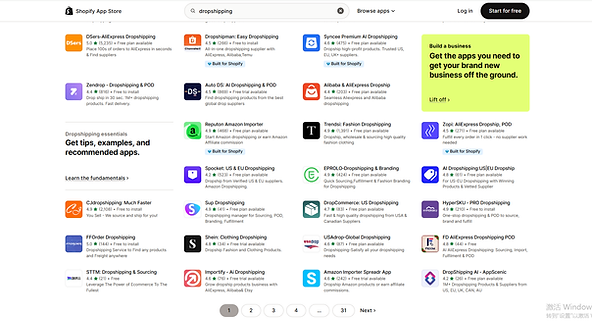
Many sellers start by searching for apps on Shopify. Use keywords such as “dropshipping” or “supplier” to find top-rated options. Review user feedback for insights on order processing, shipping speed, and customer support. These apps often enable inventory synchronization and order automation, saving significant time compared to manual processes.
Social Media and Industry Forums
Social media platforms and industry forums are valuable resources for finding reputable suppliers. On Reddit, Facebook groups, and LinkedIn, sellers frequently share supplier contacts and discuss their dropshipping experiences.
By taking part in discussions, commenting, or sending messages, you can:
- Obtain supplier contacts
- Discover useful tips not found in official guides.
Google Search
Do not overlook Google as a resource. Search for your product name along with terms such as “dropshipping supplier,” “manufacturer,” or “distributor. " Some suppliers may have basic websites, yet still provide competitive pricing and services. Always verify whether they support dropshipping, as some may only handle bulk orders.ders.
Trade Shows
If you have the time and budget, attending offline trade shows is one of the most direct and reliable methods for sourcing suppliers. Events such as the Canton Fair or Hong Kong Electronics Fair allow you to meet suppliers in person and assess their production capacity, custom services, and fulfillment reliability.
While trade shows require additional time and investment, they can facilitate long-term partnerships and help you identify quality factories that are difficult to find online.
Dropshipping Supplier FAQs
Why is choosing the right dropshipping supplier important?
A reliable supplier ensures consistent product quality, timely shipping, and smooth order fulfillment, helping your business grow and protect your brand.
How to find suppliers for dropshipping on TikTok Shop?
Use TikTok-approved apps or directories, check real reviews, and verify shipping reliability. You can also explore niche suppliers via social media, forums, or trade shows.
Is dropshipping still profitable in 2026?
Yes, it can be profitable if you focus on high-demand niches, reliable suppliers, and effective marketing. Smart product selection and supply chain management are key.
How to find the most profitable dropshipping niches in 2026?
Look for niches with steady demand, repeat purchases, and low competition. Validate ideas using trends, social data, and small test orders.
Conclusion
Choosing the right supplier is more important than youChoosing the right supplier matters more than many realize. Dropshipping is about more than selling products—it’s about managing your supply chain and making sure customers have a good experience. Whether you’re new or building a brand, reliable suppliers are essential. Take time to test and communicate with them. Don’t just go for the lowest price or fastest shipping. Long-term partners are your most valuable asset.
FFOrder Team
FFOrder helps growing brands run dropshipping and fulfillment as one system — from sourcing across 40,000+ factories to global shipping and structured after-sales.
Looking for a dropshipping supplier that scales with your brand?
FFOrder combines 670,000+ SKUs, 4,000+ suppliers, no MOQ, custom packaging, and US/EU/UK/China warehouses with Shopify & TikTok Shop automation—built for sellers moving from testing to brand-building.
-1200x628%20(14).png)