Best DTC Fulfillment Companies in 2026
Most brands pick a fulfillment partner on price alone—and pay for it later. This guide covers the 10 advantages of true DTC fulfillment, a 5-point screening framework, and 10 leading providers compared side by side for 2026.

.png)
DTC fulfillment is its own discipline—branded experiences, OEM/ODM access, 1:1 account management, and rules-based returns—not a generic 3PL's pick-pack-ship.
The 10 advantages are structural: ~25–40% gross margin after CAC, faster shipping (2–5 days), branded unboxing (+16-point repeat lift), and product-layer differentiation.
Screen every provider on 5 criteria: branded-packaging MOQ/lead time, OEM/ODM access, account-management ratio, DDP coverage, and returns-processing SLA.
Why DTC fulfillment is its own discipline
Many people use “DTC fulfillment” to describe any type of e-commerce fulfillment, but that’s not correct. DTC fulfillment is a different model from standard 3PL fulfillment, and this difference matters when you’re choosing a partner.
There are four main features that set a DTC fulfillment provider apart from a generic 3PL. First, they offer branded experiences, like assembling custom mailers, printed inserts, and special unboxing touches for each order without high extra fees. Second, they provide OEM/ODM and customization options, allowing brands to change product details, not just packaging, through direct manufacturing relationships. Third, they offer dedicated account management, giving each client a specific operations lead instead of a shared support queue. Fourth, they handle returns and after-sales with clear rules, photo documentation, restocking processes, and customer service that turns returns into a way to keep customers, not just a cost.
A provider may be good at basic tasks like picking, packing, and shipping, but still miss the key DTC features listed above. Many brands confuse these two types of providers and only notice the difference months later, when their fulfillment partner treats their products like generic items instead of a brand. The screening framework in this guide is designed to help you spot this difference before you sign a contract.
If you want to learn more about why fulfillment quality matters for DTC brands, see Why Fulfillment Stability Is the Lifeline of DTC Brands. This guide focuses on practical steps: which providers to consider, how to evaluate them, and what advantages make the investment worthwhile.
The 10 advantages of DTC fulfillment
Before you compare providers, it’s important to understand what DTC fulfillment really offers. The benefits are broader than most people think. There are ten main advantages, each with a real impact on your operations or finances.
1. Direct customer relationship and first-party data ownership. Every DTC order is a first-party data event the brand owns — email, address, order history, product affinity. Marketplace and retail channels surrender most of that data to the platform. A DTC fulfillment operation lets the brand build a customer database that compounds in value over the years; brands with mature first-party data run 25–40% lower customer-acquisition cost by year three than brands relying on cold paid acquisition into platform-owned audiences.
2. Higher gross margin after CAC. DTC unit economics with private inventory, customization, and branded packaging typically run 25–40% gross margin after customer acquisition cost, versus 10–20% for dropshipping or marketplace-dependent models. The structural difference isn’t one or two points — it’s roughly double, and it’s the financial gravity that makes DTC worth the operational complexity.
3. Faster shipping and the conversion lift that comes with it. Consumer tolerance for shipping time sits at 4.4 days in 2026; conversion degrades roughly 7% per additional day above that threshold (ShipBob 2026 State of Fulfillment Report). A DTC fulfillment operation staging inventory at demand-market hubs delivers in 2–5 days, restoring conversion that cross-border dropshipping structurally cedes.
4. Branded unboxing experience and the repeat-purchase lift. Customers receiving branded packaging repeat-purchase at 34% within 90 days, versus 18% for unbranded shipments — a 16-point lift shown across categories in the Klaviyo 2026 unboxing-experience report. On a USD 60 AOV brand running 1,000 orders/month, that translates to roughly USD 9,600/month of additional repeat revenue against USD 800–1,200/month of incremental packaging cost.
5. Product differentiation through OEM/ODM customization. A DTC fulfillment partner with manufacturing access lets the brand customize at the product layer, not just the packaging layer. OEM (logo + version) at 50–500 unit MOQ, 7–21 day lead time, 8–18% cost premium; ODM (design changes) at 200–2,000 unit MOQ, 30–60 day lead time, 15–40% premium. Either makes the SKU functionally exclusive and breaks the dropshipping copycat dynamic where any margin attracts competitors running the same factory product at the same wholesale price.
6. Inventory control and forecastable replenishment. Private inventory positioned at a fulfillment hub gives the brand control over stockouts, replenishment cadence, and demand-spike capacity. Dropshipping operations have none of this — when the supplier deprioritises orders for a larger client, the brand has no recourse. DTC fulfillment partners running 1:1 account management surface inventory-position alerts weekly and let the brand take informed replenishment decisions rather than reactive ones.
7. Pricing flexibility and discount strategy ownership. Owning the customer relationship means owning the pricing surface. Brands can run dynamic discounting, member-only pricing, bundle promotions, and post-purchase upsells without negotiating with a marketplace intermediary or surrendering margin to a retail buyer. The pricing-power advantage is structurally larger than most operators' models — typically worth 3–8 points of gross margin at maturity versus retail-channel-dependent models.
8. Brand experience harmony across the customer lifecycle. A DTC fulfillment operation lets the brand control the experience from add-to-cart through delivery, through returns and through repeat purchase. Brands that run consistent post-purchase experiences (branded packaging + post-purchase email flow + dedicated customer service) see measurably higher Net Promoter Scores (typically 40–60 vs 15–25 for marketplace-dependent operations), which compounds into organic acquisition and lower paid CAC.
9. Returns operations as a competitive surface, not a cost line. E-commerce return rates average 17.6% overall and run 20–30% in apparel, 20–25% in beauty (QuickBox returns analysis). Brands with 24-hour returns processing and rule-based triage operate returns at 30–50% lower cost than brands with manual 72-hour processing. A DTC fulfillment partner with returns built into the workflow turns a margin drag into a customer-retention asset.
10. Faster speed-to-market for new SKUs and brand iterations. Dropshipping operations are constrained to the supplier’s existing catalogue. DTC fulfillment operations with OEM/ODM access can move a new SKU from concept to first shipment in 30–60 days rather than 90–180. The iteration-speed advantage compounds: brands that launch four new validated SKUs per year structurally out-innovate brands that launch one or two, and the compounded catalogue advantage turns nearly insurmountable by year three.
These ten advantages are not just marketing claims. There are real operational and financial reasons why DTC fulfillment is worth the extra investment and complexity. The key is to pick a provider who can deliver the right advantages for your brand’s current stage.
The 5-criteria screening framework for DTC fulfillment providers
You only get these ten advantages if your fulfillment partner can actually deliver them. Five key criteria can help you tell the difference between providers who truly perform and those who just look good on paper but fall short after a few months.
Criterion 1: Branded-packaging MOQ and lead time
The question isn’t whether the provider supports branded packaging — almost all 3PLs claim they do. The question is at what MOQ, what lead time, and what kit-in fee. Best-in-class DTC fulfillment providers support custom mailers and printed inserts at 500-unit MOQs with 2–3 week lead times, with kit-in fees under USD 1.00/order at typical complexity. Providers requiring 2,000+ unit MOQs or 8+ week lead times are structurally scoped for enterprise brands, not scaling DTC operators in the USD 100K–5M revenue range.
Ask for the MOQ and lead time on (a) a printed custom mailer in two SKU sizes, (b) a printed insert card, and © a thank-you note with QR code, and ask for the kit-in fee per order to assemble all three at the fulfillment hub. The answers should arrive in writing within 48 hours. If the conversation drifts toward “it depends, let’s get on a call,” the provider isn’t operating branded packaging as a productised capability — they’re operating it as a one-off custom job, which means it won’t scale.
Criterion 2: OEM/ODM and manufacturing access
Most generic 3PLs don’t have manufacturing access at all — they fulfill what the brand sends them. A DTC fulfillment partner with structural manufacturing access (either equity-controlled factory relationships or operated manufacturing partnerships) lets the brand customize at the product layer, not just the packaging layer. The economic difference is large: product-layer differentiation defends pricing power; packaging-layer differentiation defends only the unpacking experience.
The acid test is asking the provider for (a) the OEM MOQ on their core product categories, (b) the typical lead time from spec to first shipment, and © the quality-defect rate on completed OEM orders in the last 90 days. Providers with real manufacturing access answer with specifics (“50-unit MOQ on apparel, 14-day lead time, 2.1% defect rate”); providers brokering through agents answer with hedged language (“depends on the factory, typically 4–8 weeks, varies by product”). The hedging is the answer.
The wider operational logic of OEM/ODM is covered in DTC ecommerce fulfillment services.
Criterion 3: Account-management ratio and named operational owner
The single most-correlated SLA variable with operational satisfaction at the scaling DTC stage is the account-management ratio. A provider running one account manager per 100–300 clients is structurally incapable of providing the responsiveness a scaling brand needs during an operational crisis (a customs hold, a peak-season volume spike, a returns surge after a viral negative review). A provider running 1:1 dedicated account management — a named operations lead per account, with backup coverage — has the staffing model to keep response time under 4 hours during business hours and under 24 hours on weekends.
In any provider conversation, ask for the account-manager-to-client ratio in writing and ask for the named operations lead before signing. If the provider can’t name the operations lead at contract signing, the account goes into a common queue regardless of what the marketing page claims. The ratio is the most dependable predictor of operational responsiveness under stress.
Criterion 4: DDP coverage and cross-border lanes
For any brand selling internationally — and an increasing share of US DTC brands now do — DDP (Delivered Duty Paid) coverage is essential. Without DDP, customers in Brazil, the UK, the EU, Australia, or major Southeast Asian markets can be hit with surprise duty charges at delivery, which is one of the highest-impact return-rate amplifiers in cross-border DTC. Brands shipping non-DDP into duty-sensitive markets routinely run 15–25 percentage points higher return rates than brands running DDP lanes.
Ask the provider for (a) the list of destination markets with DDP lanes operational today, (b) the typical landed-cost calculation methodology, and © the carrier relationships handling last-mile in each market. Providers that can’t enumerate the DDP markets specifically are running ex-works shipping at best, and the duty surprise problem will surface on the first international order. The mechanics of DDP lane operation are documented on customs clearance advantages.
Criterion 5: Returns processing speed and SLA discipline
Returns are the operational surface where DTC fulfillment providers diverge most visibly. Best-in-class providers run 24-hour returns processing with rule-based triage (restock vs refurbish vs liquidate vs dispose) and photo evidence capture for each unit. Average providers run 72-hour manual triage. The cost difference is 30–50% on returns processing per unit, and the customer-experience difference is materially larger — brands with fast returns processing run measurably higher repeat-purchase rates because the customer-friction tax of a slow refund compounds across the catalogue.
Ask for the median and 90th-percentile returns processing time, the triage logic, and the inclusion into the brand’s customer-service system. The four SLA numbers that should appear in any DTC fulfillment contract are on-time shipping rate (best-in-class 99.5–99.8%), pick accuracy (99.5–99.9%), inventory accuracy (99.888% top-quartile), and Perfect Order Rate (95%+) (Cahoot SLA benchmarks). Returns processing SLA should be the fifth.
The 10 DTC fulfillment providers worth evaluating in 2026
The ten providers below come up repeatedly in 2026 DTC fulfillment shortlists across operator communities, comparison sites, and sector reports. Each is reviewed against the same 6-line operator brief: positioning · geographic footprint · pricing model · DTC strengths · best for · watch-outs. The order is not a ranking — it’s roughly the order operators encounter them on their first shortlist.
1. ShipBob
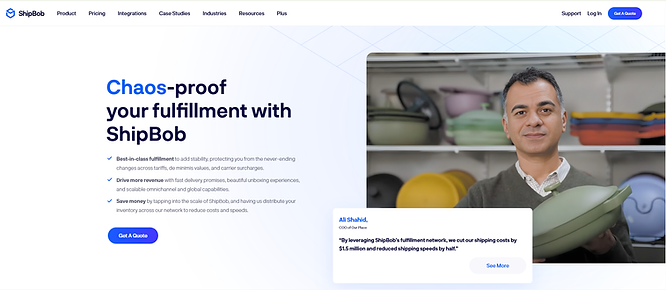
- Positioning: The most-recognised DTC fulfillment platform in North America, software-led with a distributed warehouse network and native Shopify/WooCommerce/BigCommerce integrations.
- Geographic footprint: 40+ fulfillment centres across the US, Canada, UK, EU, and Australia. Strong US coverage; cross-border via partner network.
- Pricing model: Per-order receiving + storage + pick-pack + shipping. Growth Plan for under-400-orders/month operations; standard plan above. Setup fees up to USD 1,000 (OTW Shipping comparison).
- DTC strengths: Mature kitting and inserts at moderate MOQ; deep platform integrations; multi-warehouse inventory distribution for 2-day US delivery.
- Best for: Small-to-mid-sized DTC brands at 500–10,000 orders/month, primarily US-anchored, where software-led fulfillment with multi-warehouse coverage matters more than dedicated account management.
- Watch-outs: Account-management ratio sits in the shared-queue model — 48-hour response times are common in customer reviews (ShipCalm comparison); offboarding is reportedly friction-heavy; OEM/ODM is not part of the offering. Brands needing manufacturing access source it elsewhere.
2. ShipMonk

- Positioning: DTC-and-subscription-focused 3PL with owned fulfillment centres and a strong emphasis on customization, kitting, and branded experience.
- Geographic footprint: 12+ fulfillment centres in the US, plus operations in the UK, EU, Canada, and Mexico.
- Pricing model: Subscription tiers + per-order + storage. Open pricing relative to the industry, no minimum order volume (Red Stag comparison).
- DTC strengths: Wide-ranging customization options, including branded packaging, kitting, and inserts; subscription-box-friendly workflows; Happiness Engineer support model regularly praised for responsiveness..
- Best for: Subscription-box brands and customization-heavy DTC operations at 200–8,000 orders/month, particularly where kitting complexity is part of the product itself.
- Watch-outs: Hidden-fee concerns surface in user reviews (Speed Commerce comparison); offboarding reportedly takes 6+ months in some accounts with continued billing during the wind-down; no manufacturing access, so OEM/ODM requires a separate vendor.
3. Shipfusion

- Positioning: Mid-market DTC 3PL with emphasis on high-velocity ecommerce brands and direct technology integration.
- Geographic footprint: 5 fulfillment centres across the US and Canada.
- Pricing model: Per-order + storage + receiving. Transparent fee structure, no setup fee for standard plans.
- DTC strengths: API-led integration with Shopify, Amazon, and major ERPs; consistent SLA enforcement; mid-market dedicated account management at workable ratios.
- Best for: Mid-size DTC brands at 2,000–25,000 orders/month focused on the US/Canada market, where API depth and SLA reliability matter more than international footprint.
- Watch-outs: Limited international coverage beyond North America; branded packaging supported but at standard MOQs rather than DTC-optimised tiers; no OEM/ODM offering.
4. ShipHero
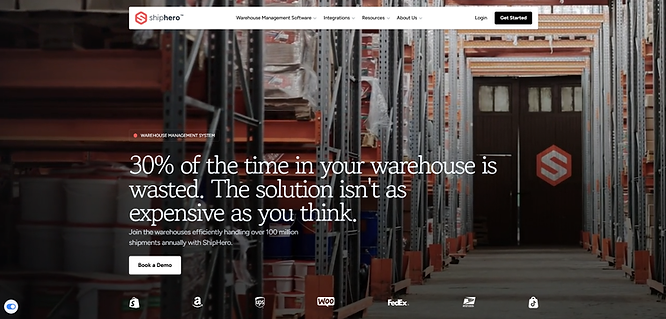
- Positioning: Warehouse management software (WMS) + 3PL hybrid, attractive to brands that want technology depth alongside outsourced fulfillment.
- Geographic footprint: 8+ fulfillment centres across the US and Canada; software available globally for self-fulfilled brands.
- Pricing model: Per-order + storage for 3PL; subscription tiers for WMS-only customers. Transparent published pricing.
- DTC strengths: Strong software-first architecture; mature reporting and analytics; supports both fully-outsourced 3PL and brand-operated WMS deployments.
- Best for: Tech-forward DTC brands at 1,000–15,000 orders/month who value analytics and reporting depth, and who may eventually self-fulfill using the WMS layer.
- Watch-outs: Smaller geographic footprint than ShipBob; branded experience supported but not the primary differentiator; account-management model varies by region.
5. ShipNetwork (Rakuten Super Logistics)
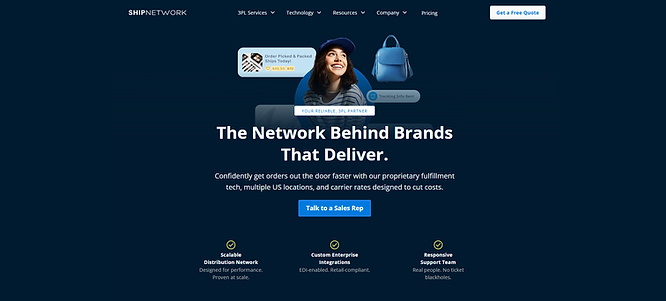
- Positioning: US-focused 3PL with same-day order processing and a guarantee-backed SLA structure, well-established with mid-market DTC.
- Geographic footprint: 12+ US fulfillment centres distributed across major demand regions.
- Pricing model: Per-order + storage + receiving; minimum monthly volume thresholds apply.
- DTC strengths: Same-day order processing as standard SLA; strong inventory accuracy; nationwide US distribution for 1–2 day delivery to most of the country.
- Best for: US-anchored DTC brands at 3,000–30,000 orders/month where domestic speed-to-delivery is the primary competitive surface.
- Watch-outs: Limited international presence; branded packaging at conventional MOQs; longer onboarding cycles reported in some user testimonials; no manufacturing access.
6. Verde Fulfillment
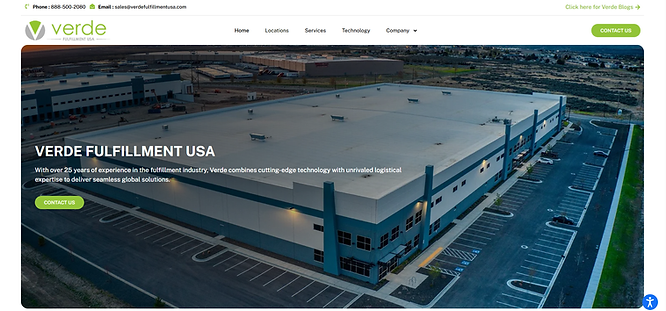
- Positioning: DTC + B2B hybrid 3PL with a single inventory pool for omnichannel brands selling through both direct and wholesale channels.
- Geographic footprint: US-based, single major facility with national shipping coverage.
- Pricing model: Per-order + storage; quote-based with transparency on call.
- DTC strengths: Omnichannel architecture lets brands manage DTC and wholesale from one inventory pool (Verde Fulfillment comparison); EDI-compliant shipping for retail; flexible kitting.
- Best for: DTC brands at 1,500–20,000 orders/month that are expanding into wholesale or retail channels and want unified inventory management.
- Watch-outs: Single-facility coverage means longer transit to coastal demand markets; less scalable for very high volume; no manufacturing access.
7. GoBolt

- Positioning: Tech-forward 3PL for medium-to-large DTC brands, with an integrated technology platform and last-mile delivery in select markets.
- Geographic footprint: 20+ fulfillment centres across the US and Canada; in-house last-mile delivery in major metros.
- Pricing model: Per-order + storage; tiered for scale.
- DTC strengths: Integrated tech platform with real-time inventory visibility; in-house last-mile in 10+ metros (lower carrier cost in those markets); strong scaling support for brands above USD 5M revenue (GoBolt 3PL comparison).
- Best for: Medium-to-large DTC brands at 10,000+ orders/month scaling past USD 5M revenue, where tech-related depth and last-mile control add measurable value.
- Watch-outs: Pricing structure favours larger operations; not optimised for sub-1,000-orders/month brands; international footprint limited; branded packaging at conventional MOQs.
8. Red Stag Fulfillment

- Positioning: Specialist DTC 3PL for heavy, bulky, or premium-value products where the standard parcel model breaks down.
- Geographic footprint: 2 strategically-positioned US facilities (Tennessee, Utah) covering the entire continental US in 2–3 days.
- Pricing model: Per-order + storage; higher minimums than parcel-focused 3PLs.
- DTC strengths: Specialised handling for furniture, electronics, sporting goods, and oversized items; accuracy guarantees backed by financial credit for misses; strong security for high-value SKUs (Red Stag 2026 best fulfillment guide).
- Best for: DTC brands selling heavy, bulky, or expensive items (furniture, large electronics, fitness equipment) at any scale where specialist handling outweighs general-purpose parcel pricing.
- Watch-outs: Not cost-competitive for lightweight standard parcels; higher minimums; less optimised for small subscription boxes or small-parcel customization.
9. Floship
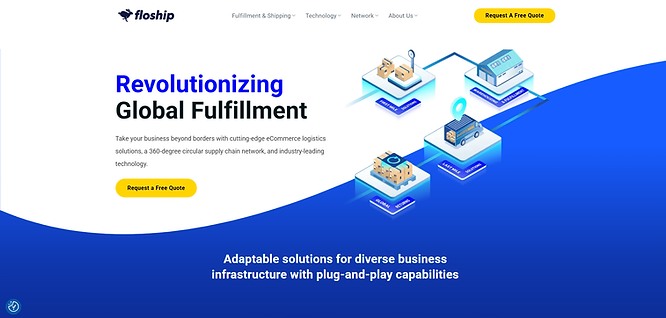
- Positioning: Cross-border DTC 3PL with Asia-origin operations, focused on brands selling from Asian manufacturing into Western demand markets.
- Geographic footprint: Hubs in Hong Kong and mainland China, with delivery into 220+ destination countries.
- Pricing model: Per-order + storage + DDP shipping; quote-based.
- DTC strengths: Strong cross-border lanes from Asia origin; DDP coverage into major Western markets; Shopify-native integration; suited to brands manufacturing in Asia.
- Best for: DTC brands with Asia-origin manufacturing shipping into the US, EU, UK, and Australia at 500–15,000 orders/month, where origin-side fulfillment matters more than destination-market warehouse staging.
- Watch-outs: No destination-market warehouse network — transit times longer than US-domestic 3PLs; manufacturing access limited; account-management model varies.
10. FFOrder

- Positioning: Cross-border DTC fulfillment with equity-controlled core factory partnerships across apparel, electronics, beauty, and outdoor categories — built specifically for brands going through the dropshipping-to-DTC transition or operating from Asia-origin manufacturing into global demand markets.
- Geographic footprint: Multi-hub network in Zhengzhou, Shenzhen, and Yiwu with 13,000 m² of self-operated warehouse space, processing 50,000 orders/day at 60% automation, with 100+ international logistics routes including DDP lanes into Brazil (via Programa Remessa Conforme), the UK, EU, Australia, Mexico, and major Southeast Asian markets.
- Pricing model: Per-order + storage + DDP shipping; volume-tiered with transparency on the four pillars (procurement, warehousing, customization, after-sales). Custom packaging at 500-unit MOQ; OEM/ODM at 50–500 unit MOQ with 7–14 day lead times through directly-operated factory partnerships.
- DTC strengths: The full DTC capability stack under one account — equity-controlled OEM/ODM access, private-inventory staging with 12-hour dispatch SLA, custom packaging design + supply at scaling-brand MOQs, 100+ VIP account managers running 1:1 dedicated client relationships (named operations lead, named logistics lead, named customer-support lead per account), and 99.8% delivery dependability across the route network. More than 110,000 corporate clients worldwide operate on the platform.
- Best for: DTC brands transitioning from dropshipping to private inventory + customization, brands with Asia-origin manufacturing scaling into multiple demand markets, and operators who want OEM/ODM + branded packaging + DDP fulfillment + dedicated account management as a single integrated relationship rather than four separate vendors.
- Watch-outs: Asia-origin model means brands that need US-domestic warehousing exclusively still pair FFOrder with a US 3PL for the last-mile leg; the full capability stack is over-scoped for brands at under 300 orders/month who only need basic parcel fulfillment.
More details on the operating model are on the DTC ecommerce fulfillment services, custom packaging, and dropshipping solutions pages.
Side-by-side: DTC fulfillment providers compared
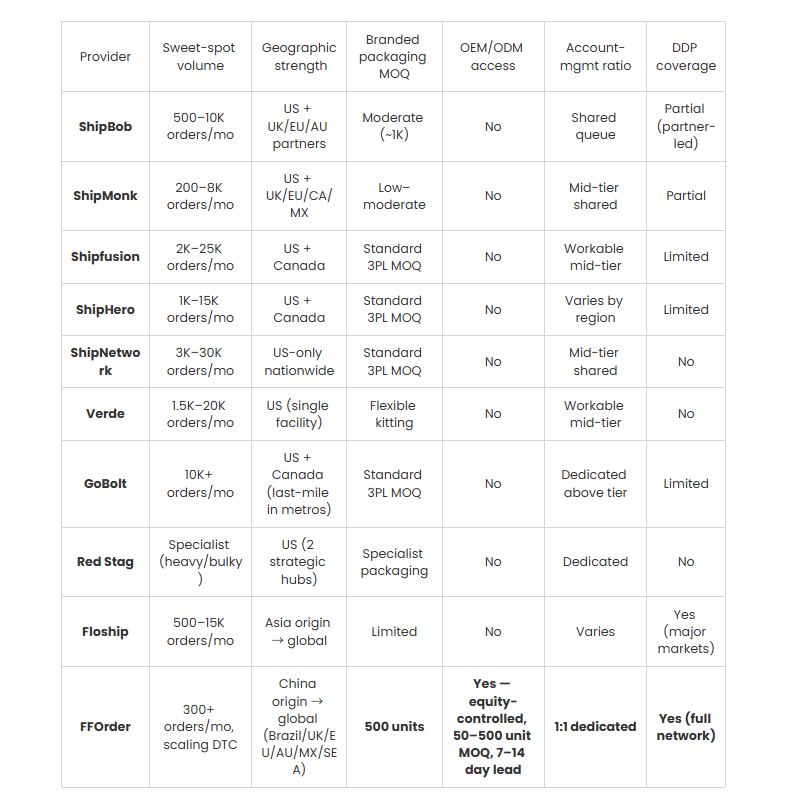
The main takeaway from the comparison table is that most DTC fulfillment providers only offer part of the full set of capabilities, such as US warehouse coverage and branded packaging, cross-border DDP, or specialized handling. It’s rare to find a provider that offers everything in one place, including OEM/ODM, private inventory, branded packaging, DDP, and dedicated account management. Having all these features together makes the switch from dropshipping to DTC much easier for brands that want to avoid managing multiple vendors.
Three operator archetypes, and which providers fit
Choosing the right DTC fulfillment provider is less about who has the most features and more about which one fits your brand’s current stage and location. Most growing DTC brands fall into one of three main types.
Archetype 1: The US-anchored DTC scaler
Profile: Hero SKU validated, 1,000–10,000 orders/month, primarily US customer base, some early international demand. Manufacturing currently sourced from a single overseas supplier or domestic factory. Branded packaging is a current need; OEM/ODM is 12–18 months out.
Shortlist: ShipBob or ShipMonk for the warehouse/software/branded-packaging layer, paired with a sourcing relationship (FFOrder, a domestic agent, or a direct factory contract) for the manufacturing layer. Operators at the higher end of this archetype (5,000+ orders/month) sometimes graduate to Shipfusion or GoBolt for tighter SLA and better mid-market pricing.
Avoid: Pure cross-border 3PLs (Floship) when the customer base is 80%+ US; specialist hubs (Red Stag) unless product fits the heavy/bulky profile.
Archetype 2: The cross-border DTC brand
Profile: Manufacturing in Asia (often China), customer base distributed across multiple Western and Latin American markets, 1,000–20,000 orders/month. Branded packaging, OEM customization, and DDP fulfillment are all current operational necessities. Hero SKUs validated, additional SKUs in pipeline.
Shortlist: FFOrder as the integrated stack (manufacturing + private inventory + branded packaging + DDP + dedicated AM), optionally paired with a destination-market 3PL (ShipBob, ShipMonk) for US-domestic last-mile staging if volume per US region justifies it. Floship is a lighter alternative for cross-border-only operations without manufacturing access needs.
Avoid: US-only 3PLs (ShipNetwork, Verde) when 40%+ of orders are international; providers without DDP coverage when shipping into duty-sensitive markets (Brazil, EU, Mexico).
Archetype 3: The category-specialist DTC brand
Profile: Heavy/bulky/high-value products (furniture, large electronics, fitness equipment), or specialist categories governed by regulatory requirements (supplements, cosmetics, food). Volume varies widely; the constraint is product handling, not order count.
Shortlist: Red Stag for heavy/bulky; specialist 3PLs in regulated categories (the category-specific equivalents); pair with FFOrder or a direct manufacturer relationship for the sourcing leg if products are imported.
Avoid: Generic parcel-focused 3PLs (ShipBob, ShipMonk) when product profile breaks the standard parcel model; the cost penalty in pick-pack and shipping accumulates fast.
Four hidden margin levers in DTC fulfillment provider selection
Besides the main pricing model, there are four operational factors that can change your DTC fulfillment costs by 5–15% per order. These are often overlooked when comparing providers.
Lever 1: Returns processing speed and triage logic. The difference between 24-hour returns processing with rule-based triage and 72-hour manual processing is roughly 30–50% lower cost per return at typical category return rates. On an apparel brand with 25% return rate and a USD 60 AOV, that’s USD 1.50–3.00 per gross order in returns-cost savings — material at any scale.
Lever 2: Kit-in fee per branded packaging assembly. Quoted kit-in fees range from USD 0.30 to USD 1.50 per order at typical complexity. The 5x range materially affects whether branded packaging is unit-economic at low AOV. Negotiate kit-in as a single line item and lock in the rate per assembly step in writing.
Lever 3: Inventory accuracy and write-down rate. Providers running 97% inventory accuracy versus 99.888% top-quartile generate 2–5x higher write-down rates on inventory shrinkage, lost units, and miscount adjustments (Cahoot SLA benchmarks). On a brand carrying USD 100K of inventory, the difference is USD 2,000–5,000/year of avoidable write-down.
Lever 4: Peak-season capacity allocation and surcharge structure. Most providers implement peak-season surcharges (typically October through January), ranging from USD 0.25 to USD 1.50 per order. Brands that negotiate capacity-reservation clauses with no-surcharge guarantees before September generally beat the surcharge entirely; brands that don’t negotiate get hit with the full surcharge on top of compressed dispatch SLAs. The negotiation window matters as much as the negotiation itself.
FAQ
What is DTC fulfillment?
DTC fulfillment is a complete backend system for direct-to-consumer ecommerce brands. It includes private inventory storage, branded packaging and unboxing, product customization, fast delivery from multiple hubs, dedicated account management, returns and after-sales support, and reliable delivery backed by contracts. This model is very different from dropshipping, where the supplier holds inventory and ships without brand customization, and from generic 3PLs, which handle basic warehouse tasks but don’t offer the branded experience or customization.
What are the main advantages of DTC fulfillment over dropshipping?
Ten structural advantages: first-party customer data ownership, higher gross margin after CAC (25–40% vs 10–20%), faster shipping (2–5 days vs 8–18), branded unboxing and repeat-purchase lift (34% vs 18% repeat rate), product differentiation through OEM/ODM, inventory control and forecastable replenishment, pricing flexibility and discount strategy ownership, brand experience harmony across the customer lifecycle, returns operations as a competitive surface instead than a cost line, and faster speed-to-market for new SKUs and brand iterations. Combined, the advantages are why DTC fulfillment is worth the higher capital requirement and operational complexity.
How do I choose the right DTC fulfillment provider?
Apply the five-criteria screening framework: (1) branded-packaging MOQ and lead time — does the provider support 500-unit MOQ on custom mailers and inserts with 2–3 week lead times and sub-USD-1 kit-in fees; (2) OEM/ODM and manufacturing access — does the provider have direct or equity-controlled factory relationships, or are they brokering through agents; (3) account-management ratio — 1:1 dedicated AMs versus shared queue; (4) DDP coverage in your demand markets; (5) returns processing speed and SLA discipline. Providers that can’t answer all five with specifics are scoped for a different stage of operator.
What’s the difference between DTC fulfillment and 3PL fulfillment generally?
All DTC fulfillment is 3PL fulfillment, but not all 3PL fulfillmentis DTC-grade. The distinguishing capabilities are branded-experience operations (custom mailers, inserts, unboxing assembly at order level), OEM/ODM and manufacturing access (product-layer differentiation, not just packaging-layer), dedicated account management at workable ratios (1:1 versus shared queue), and returns/after-sales workflows built into the operational model. A 3PL can be excellent at generic ecommerce fulfillment and structurally weak at DTC fulfillment; the screening framework above is designed to surface that distinction before contract signing.
How much volume do I require before DTC fulfillment makes sense?
The operational crossover where private-inventory DTC fulfillment becomes more unit-economic than dropshipping typically sits at 150–300 orders/month per item, depending on product cost and storage rate. Below that volume, dropshipping is usually more efficient (working-capital lockup outweighs unit-cost savings); above it, DTC fulfillment economics dominate decisively. Many brands run a hybrid model — validated hero SKUs on DTC fulfillment, unvalidated tail on dropshipping for testing — for the first 12–18 months. The dropshipping solutions page covers the testing-cohort side of the model.
What does DTC fulfillment cost per order?
All-in per-order cost for DTC fulfillment typically runs USD 4–18, depending on volume, geography, customization complexity, and shipping zone. At 1,000 orders/month with standard branded packaging and US domestic shipping, expect USD 5–9/order. At 10,000+ orders/month with negotiated rates and multi-hub distribution, expect USD 4–6/order. Cross-border DDP fulfillment runs USD 8–18/order depending on destination market and product weight. The actual number depends heavily on the four hidden margin levers above — returns processing speed, kit-in fee, inventory accuracy, and peak-season surcharge structure — which compound over the year.
Should I use the same DTC fulfillment provider for branded packaging and OEM customization?
Ideally yes, where the provider offers both capabilities natively. Running both through a single account relationship simplifies the operational interface, lets the branded packaging design co-evolve with the product spec, and keeps the account-management relationship continuous. Integrated platforms such as FFOrder support both layers on the same account with a single operations team accountable end-to-end; standalone 3PLs typically don’t have manufacturing access, so brands using them assemble the stack across multiple vendors (sourcing agent + 3PL + packaging supplier). The vendor-management overhead of the multi-vendor model usually exceeds the negotiation savings within 12 months.
How does DTC fulfillment handle international orders?
The critical capability is DDP (Delivered Duty Paid) coverage in the destination market — meaning the fulfillment partner handles customs and duties at landing rather than passing the surprise charge to the customer at delivery. Non-DDP cross-border shipping is one of the highest-impact return-rate amplifiers in DTC. Best-in-class DTC fulfillment providers running cross-border lanes maintain DDP coverage into major markets (US, UK, EU, Australia, Brazil via Programa Remessa Conforme, Mexico, major Southeast Asian markets) with carrier relationships, customs broker partnerships, and landed-cost calculation built into the order flow. The mechanics are detailed on customs clearance advantages.
Can I switch DTC fulfillment providers mid-flight without disrupting customers?
Yes, but only with a 60–90-day parallel-run cutover. The cleanest pattern: keep the existing provider at 100% volume during the first 30 days of contract negotiation and inventory transfer setup; route 20–30% of orders to the new provider for 30 days while monitoring the four DTC fulfillment metrics (delivery time, repeat-purchase rate, customer-service ticket volume, return rate); scale to 80–90% on the new provider in the third 30-day window once metrics validate. Operators trying to compress the cutover below 60 days routinely create operational defects that surface in month four — usually packaging-quality drift, SLA degradation, or returns-processing backup.
Closing: the provider choice is the brand choice
Choosing a DTC fulfillment provider is more than just a purchasing decision. It’s about setting up your brand’s entire operating model. The right choice gives you the backend capabilities for all ten key advantages: owning your customer data, strong margins, fast shipping, a branded experience, product differentiation, inventory control, flexible pricing, consistent customer experience, efficient returns, and quick product updates. If you choose well, your backend will quietly support your growth for years. If you choose poorly, it can limit your brand’s growth and make switching providers harder and more expensive later on.
To make a careful decision, start by listing the ten advantages that matter most for your brand right now. Use the five-point screening framework to narrow your options to three to five providers. Check their answers against real performance data from the past 90 days, not just what’s on their website. Test your top choice by sending them 20–30% of your orders for a month before fully switching over. When you sign the contract, include clear SLA numbers, penalties for missed targets, peak-season capacity guarantees, and a 90-day notice period to protect your business if things don’t work out.
If you follow these steps, your backend will no longer be a worry. Instead, it will become the solid foundation your brand can rely on for years to come.
FFOrder Team
FFOrder helps growing brands run dropshipping and fulfillment as one system — from sourcing across 40,000+ factories to global shipping and structured after-sales.
Ready to choose a fulfillment partner that scales with your brand?
Branded packaging at low MOQ, OEM/ODM access, 1:1 account management, DDP lanes, and fast returns—FFOrder is built for scaling DTC brands.
-1200x628%20(14).png)