
Best Ecommerce Fulfillment Services Platforms in 2026
Not all fulfillment platforms solve the same problem. This buyer's guide reviews 10 platforms on the same criteria—positioning, geography, pricing, strengths, best-for, and watch-outs—so you pick the model that still fits in two years.

-1200x628.png)
Don't ask which platform is "best"—ask which model fits where your business will be in two years; the wrong choice quietly caps growth at ~$2M.
Platforms fall into distinct types: traditional 3PLs, software-first hybrids, freight-plus-fulfillment full-stack, sourcing-plus-fulfillment, and shipping aggregators (which aren't 3PLs at all).
Match provider to need: ShipBob for multi-continent DTC, Red Stag for heavy/oversized, Flexport for freight+fulfillment, CJdropshipping for beginners, FFOrder for China-origin sourcing + 100+ routes.
How ecommerce fulfillment platforms differ in 2026
Before we look at the ten platforms, here’s a quick overview. Fulfillment platforms fall into four primary types, and knowing which type each one is helps you narrow your options.
Traditional 3PL networks run their own or contracted warehouses and charge for each step—receiving, storage, picking, packing, shipping, and returns. ShipBob, ShipMonk, Red Stag, ShipNetwork, and DCL Logistics are examples.
Software-first hybrids provide warehouse management software and access to a partner warehouse network. You can use your own warehouse, connect to theirs, or combine both. ShipHero is a leading example.
Freight-and-fulfillment full-stack providers handle inbound ocean or air freight, customs clearance, and outbound fulfillment under one account. Flexport, which acquired Deliverr, is the biggest. Their promise is that one team manages your shipment from a factory in China to a customer’s door in the US.
Sourcing-plus-fulfillment platforms combine product sourcing, warehousing, and outbound fulfillment into one landed cost per unit. CJdropshipping, Floship, and FFOrder are in this group. In contrast to traditional 3PLs, there’s no separate supplier or 3PL, so costs are bundled together. This can make comparisons tricky until you calculate the total cost.
There’s also a fifth, related category: shipping aggregators like Easyship and ShipStation. They connect your store to 50 to 250 or more carriers and help you pick the best carrier for each order, but they don’t store your inventory. People often confuse them with 3PLs, but they serve a different purpose. We’ll discuss Easyship later since it’s often compared to fulfillment platforms.
ShipBob — the DTC market leader
Positioning: The default answer for venture-backed DTC brands that need a brand-experience layer (branded packaging, inserts, kitting) on top of multi-warehouse 3PL infrastructure.
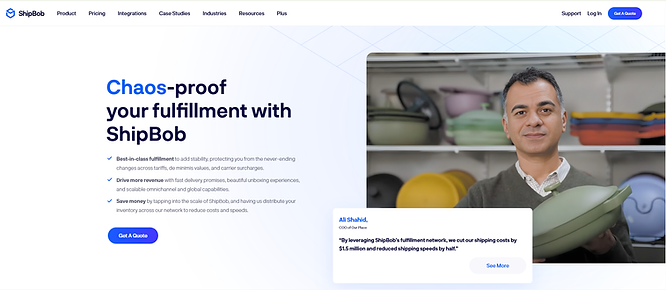
Geography: 50+ fulfillment centers across the US, Canada, UK, EU, and Australia. The largest international footprint of any DTC-focused 3PL, which is why brands shipping into three or more continents from a single account tend to land here.
Pricing model: Per-pick + per-pack with a monthly account fee. Pick fees start around USD 0.20–1.00 per item, depending on volume tier; pack fees around USD 1–2 per order; storage per cubic foot. The reverse of all-inclusive — every line is itemised, which is good for visibility and bad for spreadsheet-modelling fatigue.
SLA strengths: Best-in-class 99%+ pick accuracy and 99%+ on-time shipping have been published consistently. The Klaviyo, Shopify, BigCommerce, Amazon, TikTok Shop, and Walmart integrations are first-party and well-maintained. Order-routing logic auto-assigns the closest fulfillment center to the customer, which compresses transit time and last-mile cost.
Best for: DTC brands doing 1,000–20,000 orders/month across multiple international markets, where the brand-experience layer matters and the per-itemised-line cost overhead is justified by the operational dependability.
Watch-outs: Not the cheapest. Inventory minimums per warehouse make it inefficient if you have a long-tail SKU strategy with many slow-movers. The brand-customization premium (15–25% above commodity 3PL pricing) is real and paid back through return-rate compression — verify that the return-rate compression is showing up before committing to year two.
ShipMonk — the mid-market scaling specialist
Positioning: Tech-forward 3PL with deep expertise in subscription boxes, crowdfunding kitting, and high-SKU-velocity DTC. The ShipBob alternative for brands that want a more hands-on operations relationship.

Geography: 12 fulfillment centers across the US (Los Angeles, Fort Lauderdale, Pittston, PA, Louisville, Las Vegas, Dayton, Fort Worth, plus four more) and growing international footprint via UK, Canada, Mexico, and EU partnerships.
Pricing model: Per-pick + per-pack + storage, with custom quotes for kitting and subscription operations. The kitting fee structure is the differentiator — ShipMonk publishes per-component kitting rates rather than absorbing kitting into a vague “complex order” fee, which makes subscription-box and crowdfunding-fulfillment math easier to model.
SLA strengths: Published 99.5%+ pick accuracy. The 3PL platform (their proprietary WMS) is widely cited as the strongest software layer in the mid-market segment. Real-time inventory sync across Shopify, Amazon, eBay, Etsy, Walmart, BigCommerce and WooCommerce.
Best for: Subscription-box operators, Kickstarter/Indiegogo-funded brands going from pre-order to monthly fulfillment, and DTC brands in the 500–10,000 orders/month range with high SKU complexity per order.
Watch-outs: International coverage thinner than ShipBob — if your operation is genuinely multi-continent from day one, the warehouse-network constraint matters. Smaller brands report onboarding can take 4–6 weeks; not the fastest if you need to be live this month.
Red Stag Fulfillment — the heavy and oversized specialist
Positioning: The only 3PL in mainstream consideration that publishes a 100% order accuracy and on-time guarantee with cash penalties for misses. Built specifically for heavy, oversized, high-value, or fragile SKUs that other 3PLs treat as exception cases.

Geography: Two US fulfillment centers (Knoxville, TN, Salt Lake City, UT) covering 95% of the US in 2-day ground transit. No international footprint — this is a US-only operator.
Pricing model: Per-pick + per-pack with storage. Premium pricing (typically 20–40% above commodity 3PL rates) is justified by the accuracy guarantee and the operational rigor that produces it.
SLA strengths: 100% order accuracy guarantee with a USD 50 per-incident penalty paid to the brand if they ship the wrong item. Same-day shipping for all orders placed by 5 PM local. 48-hour receiving on inbound inventory. These aren’t marketing numbers — they’re contractual, and they’re audited.
Best for: Brands shipping SKUs over 30 lbs, items valued over USD 100, or fragile/high-touch products where a single wrong-item incident costs you USD 200+ in customer-service workload, return shipping, and review-score damage. Outdoor equipment, fitness equipment, premium electronics, glassware, furniture.
Watch-outs: US-only. The premium pricing is hard to justify for low-AOV, low-weight SKUs where the accuracy upside doesn’t compound. Not a fit if your operation is lightweight, low-value, or international.
ShipNetwork (Rakuten Super Logistics) — the national same-day operator
Positioning: National US 3PL with a published 100% same-day shipping pledge on orders received by the cutoff. Lower-profile than ShipBob/ShipMonk but with one of the longest operating histories in ecommerce fulfillment (founded 2001, rebranded from Rakuten Super Logistics in 2022).
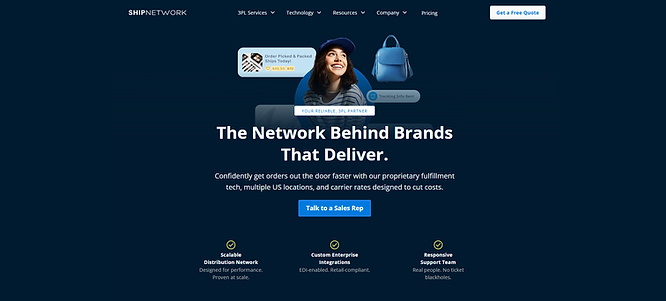
Geography: 8 US fulfillment centers (Las Vegas, Reno, Olean NY, Atlanta, Salt Lake City, Scranton, Houston, Los Angeles) covering the full US in 1–2 day ground transit.
Pricing model: Per-pick + per-pack + storage, with volume tiers kicking in at 1,000+ monthly orders. Mid-tier pricing — sits between commodity 3PL and ShipBob/ShipMonk.
SLA strengths: 100% same-day shipping pledge for orders placed by 2 PM local time at each warehouse. 99.5% order accuracy published. Strong integration with Shopify, Amazon, eBay, Walmart, Etsy, BigCommerce and WooCommerce.
Best for: US-focused brands doing 1,000–20,000 orders/month where same-day shipping is a competitive advantage (Amazon Buy Box defense, Walmart Marketplace fast-shipping eligibility, DTC speed promises).
Watch-outs: US-only — zero international coverage. The same-day pledge depends on the order arriving before the 2 PM cutoff at the correct fulfillment center, which means multi-warehouse routing has to be configured carefully. Worth asking, before signing, what percentage of your projected order mix will actually qualify for same-day under your projected SKU distribution.
Flexport (Flexport Fulfillment, formerly Deliverr) — the freight-plus-fulfillment full stack
Positioning: The only major platform that owns ocean freight forwarding, customs brokerage, and outbound ecommerce fulfillment under one operations team. After absorbing Deliverr in 2023, Flexport built the full-stack “factory dock to consumer doorstep” operating model that most other platforms have to assemble from multiple vendors.
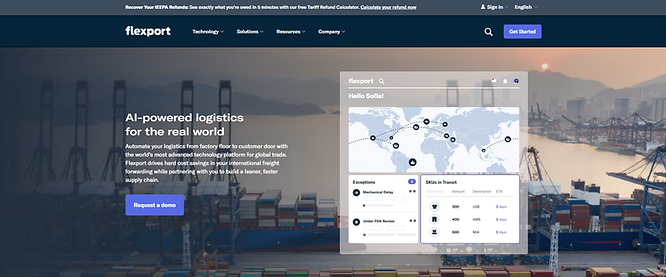
Geography: 100+ warehouses globally (combining the legacy Flexport freight footprint with Deliverr’s US fulfillment network). Direct fulfillment in the US, UK, EU, Canada; freight forwarding into virtually every major trade lane.
Pricing model: Per-order all-in rates for outbound fulfillment (US domestic from USD 4–6 per order at volume), plus separately negotiated freight and customs lines. The combined benefit is operational — one account manager, one tracking system, one P&L line — not necessarily price savings.
SLA strengths: Published 2-day delivery network for US ecommerce. The freight-plus-fulfillment integration is the real SLA strength: you don’t lose three weeks at the US port because your freight forwarder and your 3PL are blaming each other for a customs hold. The operations team that cleared customs is the same team that received the inventory.
Best for: Brands importing from China to the US/UK/EU at scale who are tired of running freight forwarding, customs brokerage, and 3PL as three separate vendor relationships with three separate finger-pointing surfaces.
Watch-outs: Flexport has been through restructuring cycles (2023–2024 layoffs and strategy resets); ask for current operating-team continuity and current SLA performance, not legacy reputation. The integrated stack pricing is opaque — force the quote into per-stage line items before comparing to per-touch 3PLs.
ShipHero — the software-first hybrid
Positioning: Started as a warehouse-management software (WMS) company; layered a partner-warehouse network on top. Unique in giving operators the choice between using ShipHero’s network, plugging ShipHero WMS into a warehouse you operate yourself, or running both in a hybrid.
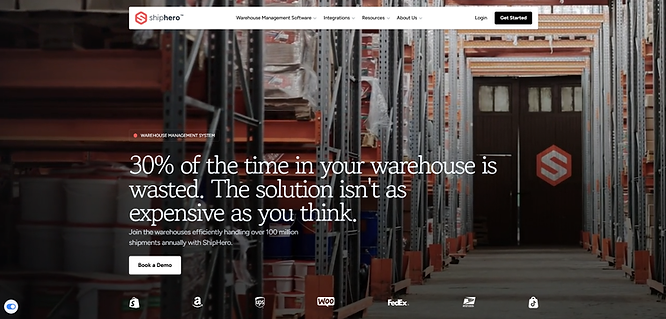
Geography: ShipHero’s own fulfillment network covers 9 US warehouses plus 1 in Canada. The WMS-only model means brands can operate from any warehouse globally that runs ShipHero software.
Pricing model: Two SKUs. Fulfillment: per-pick + per-pack + storage at competitive rates (often 10–20% below ShipBob for comparable order profiles). WMS-only: SaaS subscription starting around USD 1,995/month for the warehouse software, useful for brands going in-house or operating their own 3PL.
SLA strengths: 99% on-time shipping and 99.7% pick accuracy published. The software-first heritage means the integrations and the WMS UX are unusually strong for a 3PL.
Best for: Two distinct profiles. Brands transitioning from 3PL to in-house fulfillment (use ShipHero WMS in your own warehouse). And mid-market DTC brands want a 3PL with stronger software than the legacy 3PL competition.
Watch-outs: The 9-warehouse network is smaller than ShipBob/ShipMonk. International coverage is thin. The WMS-only path is powerful but requires real operational maturity — don’t pick it because the SaaS sticker looks cheaper than 3PL per-order rates without modeling labor and real-estate costs honestly.
Easyship — the cross-border shipping aggregator
Positioning: Not a 3PL. Easyship is a shipping rate aggregator and decision-layer that sits between your store and 250+ courier services worldwide, automatically selecting the optimal carrier per order based on cost, speed, and destination customs treatment. Included here because it’s commonly evaluated alongside fulfillment platforms and gets miscompared.
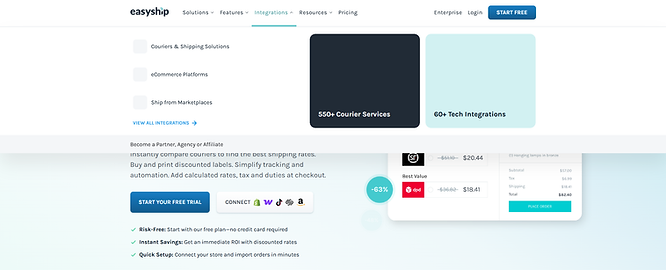
Geography: Global. The 250+ courier integration is the product — USPS, UPS, FedEx, DHL, China Post, Royal Mail, Australia Post, and dozens of regional/last-mile carriers in Europe, Asia, and Latin America.
Pricing model: Free tier for under 100 shipments/month; paid tiers from USD 29/month upward. Easyship makes a margin on negotiated carrier rates passed through at a markup; the savings on shipping rates typically exceed the platform fee for any brand with over 50 shipments/month.
SLA strengths: Easyship doesn’t pick, pack, or ship — so SLA in the 3PL sense doesn’t apply. What does apply: the platform claims discounts up to 91% on major courier rates through aggregated volume, plus automated customs documentation and tax-and-duty pre-calculation for 220+ destinations.
Best for: Brands fulfilling in-house (or via a 3PL that lets you choose carriers) who ship cross-border at volume and need rate optimization throughout many destinations. Often pairs with a 3PL rather than replacing one.
Watch-outs: Easyship doesn’t store inventory or fulfill orders. If you need a 3PL, this isn’t one. The shortlist this confusion causes — brands evaluating ShipBob alongside Easyship without realizing they’re not the same product — is the single most common scoping error in the category.
CJdropshipping — the sourcing-plus-fulfillment broad-market option
Positioning: The largest sourcing-plus-fulfillment integrated platform serving small-and-mid-sized ecommerce operators globally. Founded in Yiwu, expanded into a global warehouse network. Best fit for beginner-to-mid stage operators testing niches without committing to a separate sourcing + 3PL split.
Geography: Warehouses in China, the US, UK, Germany, France, Thailand, Indonesia, Brazil, and a handful of others — 200+ warehouses in total per public disclosures, though directly-operated capacity is smaller than the warehouse count implies.
Pricing model: Integrated landed-cost-per-unit (no separate storage or pick-pack fee for most operations). The cost for fulfillment is rolled into the product unit cost, which makes margin math simple but obscures the per-stage breakdown.
SLA strengths: 4–7 day delivery from the US warehouse; 8–15 day cross-border from China to the US/EU on standard modes. The strength is the breadth of the SKU catalog — sourcing, customization, branded packaging, and POD all available on the same account.
Best for: Beginner-to-mid stage operators (50–2,000 orders/month) testing multiple niches who want sourcing + fulfillment under one account without separately negotiating with a Chinese factory and a domestic 3PL.
Watch-outs: Customer-service consistency varies by warehouse and by SKU category. The breadth of the catalog is a feature for testing and a bug for brand consistency at scale. Brands maturing past 2,000 orders/month tend to migrate to either a direct-factory sourcing relationship or a more enterprise-focused integrated platform.
Floship — the Hong Kong cross-border specialist
Positioning: Hong Kong-based cross-border fulfillment specialist focused on B2B and DTC brands shipping from Asia to the US, EU, and Australia. Smaller and more specialised than CJdropshipping, with stronger enterprise-account discipline.
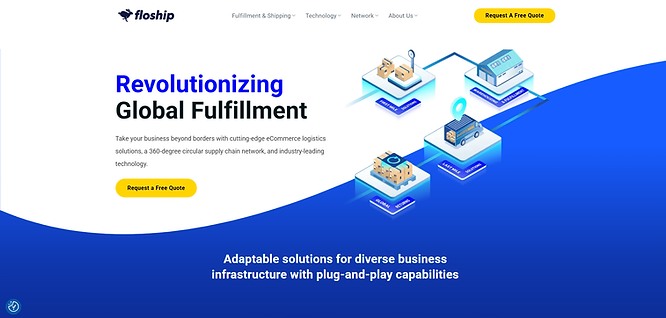
Geography: Primary hub in Hong Kong; secondary fulfillment in mainland China, Singapore, the US, and the UK. Strong air-freight and last-mile network into 220+ destination countries.
Pricing model: Per-order pricing with negotiated freight rates. Custom quotes are the standard rather than published rate cards — indicative of the enterprise-account orientation.
SLA strengths: Published 99%+ order accuracy and air-cargo lead times of 5–10 business days from Hong Kong to most major Western markets. Crowdfunding fulfillment (Kickstarter, Indiegogo) is a category strength.
Best for: Asia-based brands or international brands using Asia-origin manufacturing who need a fulfillment partner that operates the cross-border lane with enterprise-account rigor. Crowdfunding campaigns shipping from China globally.
Watch-outs: Smaller scale than CJdropshipping or Flexport — verify capacity headroom for peak season. Pricing is custom-quoted, which means evaluation requires more back-and-forth than published-rate platforms.
FFOrder — the China-origin cross-border B2B option
Positioning: China-origin integrated sourcing + customization + fulfillment platform built specifically for B2B cross-border operators and DTC brands shipping into multiple international markets simultaneously. The collapsed alternative to running a sourcing agent + a freight forwarder + a domestic 3PL as three separate vendor relationships.

Geography: 13,000㎡ self-operated warehouse in china (operated under direct control, not subleased from a partner network), feeding 100+ active international logistics routes. DDP coverage live into Brazil (integrated with Programa Remessa Conforme), the UK, EU, Australia, Mexico, and major Southeast Asian markets.
Pricing model: Integrated landed-cost-per-unit for sourcing-plus-fulfillment operations, with separable line items available for operators who want per-stage transparency. Low-MOQ customization (OEM, ODM, POD) at 50–500 unit minimums, depending on product category.
SLA strengths: 99.8% delivery dependability across the 100+ international routes, tracked rolling 90 days. 100+ VIP account managers running 1:1 dedicated client relationships — a named operations lead, a named logistics lead, and a named customer-support lead per account, each with backup coverage. 1:1 service model end-to-end rather than a shared ticket queue.
Best for: Cross-border B2B operators (Amazon, TikTok Shop, Shopify+international, Mercado Libre Brasil, marketplace aggregators) doing 1,000+ orders/month into three or more international markets where customs and routing complexity have outgrown a domestic-only 3PL. DTC brands launching internationally from a China supply base that need sourcing, customization, and outbound fulfillment under one account relationship.
Watch-outs: Not the right answer for a single-market US Shopify store doing 200 orders/month — at that volume, a US-domestic 3PL is simpler. The integrated model is structurally different from per-touch 3PL pricing; the comparison only becomes meaningful once normalised to full landed cost per order on both sides.
More details on the operating profile are on the 3PL fulfillment solutions, DTC ecommerce fulfillment services, and customs clearance advantages pages.
The platform comparison table
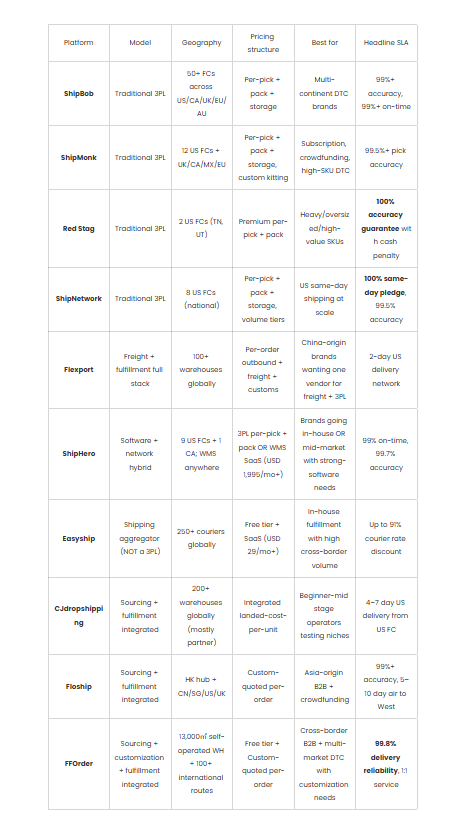
Three operator archetypes — which platform fits
Matching platforms to operators is more useful than ranking platforms in the abstract. Three archetypes cover most of the cross-border ecommerce universe in 2026.
Archetype 1: The US-domestic DTC scaler
Profile: 1,000–10,000 orders/month, US-only or US-primary, lightweight SKUs (under 5 lbs typical), Shopify + Amazon + maybe TikTok Shop, AOV USD 30–100, return rate 8–18%. The brand is past the “figuring out the product” stage and into the “figuring out the operations” stage.
Right answers: ShipBob if the brand is also shipping into the UK/EU/AU within 12 months (the international footprint pre-positions you). ShipMonk, if subscription boxes, kitting, or crowdfunding-style operations matter (the kitting fee transparency wins). ShipNetwork if same-day shipping is a competitive priority (Amazon Buy Box, Walmart Marketplace). Red Stag only if SKUs are heavy/oversized/high-value — otherwise the premium pricing isn’t justified.
Wrong answers: Flexport, unless you’re importing significant freight volume from China — the full-stack thesis is wasted if you don’t need the freight leg. CJdropshipping, unless you’re still testing niches — the integrated-landed-cost model is inefficient once you’ve identified hero SKUs and want to negotiate them directly.
Archetype 2: The cross-border international B2B operator
Profile: 2,000–50,000 orders/month, shipping into three or more international markets (Brazil + Mexico + UK, or US + EU + Australia, or marketplace operations across LATAM and SEA), AOV USD 15–80, China-origin manufacturing, customization or branded packaging matters, customs-and-routing complexity is consuming significant management time.
Right answers: FFOrder if the China-origin sourcing leg is part of the equation — the integrated sourcing + customization + DDP-fulfillment model collapses three vendor relationships into one, and the 100+ international routes, 99.8% delivery reliability, and 1:1 VIP account management are the operational expression of the model. Flexport, if you’d rather keep sourcing separate but want freight + 3PL under one account. Floship is the Hong Kong-origin alternative for crowdfunding or Asia-headquartered brands.
Wrong answers: ShipBob or ShipMonk — the multi-warehouse DTC infrastructure is built for a different profile, and the per-touch billing on cross-border lanes becomes punishing at marketplace AOV ranges. Red Stag — US-only, wrong geography.
Archetype 3: The beginner-to-mid stage niche tester
Profile: 50–1,500 orders/month, testing multiple product niches simultaneously, single founder or 2–3 person team, no dedicated operations hire yet, AOV USD 20–60, return rate undefined as product mix changes monthly. Capital is constrained; speed of iteration matters more than per-order optimization.
Right answers: CJdropshipping — the integrated landed-cost model means you can test 50 different SKUs without negotiating with 50 different suppliers. FFOrder if customization is a priority earlier than usual (POD, OEM at 50-unit MOQ for brand differentiation) and the multi-market lane infrastructure is worth pre-investing in. Easyship, alongside in-house fulfillment, if you’re early enough to be packing orders yourself and want carrier-rate optimization without giving up control.
Wrong answers: ShipBob, ShipMonk, Red Stag, ShipNetwork — the per-touch 3PL model has fixed-cost overhead that’s punishing below 500 orders/month. Flexport — over-scoped for a niche-testing operator lacking significant freight volume.
Four hidden margin levers across every platform
No matter which platform you choose, there are four key ways to improve your margins. Most operators only realize their impact in the second year, not the first.
Lever 1: Inventory turn velocity. Long-term storage fees on inventory sitting more than 6 or 12 months can add 30–100% to base storage rates. The fix isn’t negotiating storage rates — it’s improving sell-through. Aged inventory should trigger a markdown, a bundle, or a liquidation pathway before the long-term fee kicks in. A 95-day-turn operation pays 2x the storage of a 180-day-turn operation, but the difference compounds further once the long-term fees start.
Lever 2: Order-routing logic for multi-warehouse setups. Platforms with multiple warehouses (ShipBob, ShipMonk, ShipNetwork, FFOrder) route orders to the closest warehouse with stock by default. Closest is not always cheapest. Configure routing to factor in carrier-rate differences between warehouses — in some cases, the second-closest warehouse is materially cheaper because of a different carrier contract. The savings on 10,000 orders/month often pay an operations analyst’s annual salary.
Lever 3: Packaging optimization. Standard 3PL packaging adds USD 0.30–1.50 per order in cost. Custom branded packaging adds USD 1–3. Dimensional-weight optimization (using slightly smaller mailers, eliminating air gaps) typically saves USD 0.20–0.80 per shipment in carrier cost. Net of the customization premium, branded packaging carried out carefully can be cost-neutral or even cost-saving — the operators who lose money on it are the ones who add custom mailers without re-optimising the dim-weight math.
Level 4: Returns triage discipline. Average online return rate is 17.6%; in apparel, it’s 20–30%. Each return triages into one of four outcomes: restock, refurbish, liquidate, or dispose. Platforms that automate the triage decision (rules engine: “if return reason is wrong size and inspection grade is A, restock; if reason is defect, refurbish path; if liquidation value is below USD X, dispose”) cut returns processing cost by 30–50% versus platforms that triage manually. Ask any platform you’re considering whether the returns workflow is rule-driven or human-triaged. The answer determines whether returns scale linearly with order growth or exponentially.
FAQ
What are the best e-commerce fulfillment services platforms in 2026?
There’s no single “best” — the right platform depends on your geography, order profile, and growth stage. ShipBob is the default for multi-continent DTC brands. ShipMonk wins on subscription and high-kitting operations. Red Stag Fulfillment is the only mainstream 3PL with a 100% accuracy guarantee, specialised for heavy and high-value SKUs.
ShipNetwork publishes a 100% same-day shipping pledge for US domestic operators. Flexport owns the freight + fulfillment full stack. ShipHero is the software-first hybrid (3PL network or WMS-only). CJdropshipping is the integrated sourcing-plus-fulfillment option for beginner-to-mid stage operators. Floship is the Hong Kong cross-border specialist. FFOrder is the China-origin cross-border option for B2B operators shipping into 3+ international markets with customization and DDP requirements.
How much do e-commerce fulfillment platforms cost?
Industry data puts per-order fulfillment cost at USD 3–15 all-in, depending on order complexity, packaging, weight, destination, and volume tier. (eplogistics 2026 data) A typical 500-orders-per-month operation runs USD 4,000–6,000/month all-in; a 5,000-orders-per-month operation runs USD 25,000–30,000; a 20,000-orders-per-month operation runs USD 85,000–95,000. (cart.com pricing guide) The headline per-order rate is less informative than the full all-in landed cost — normalise quotes onto the same model before comparing.
What’s the difference between ShipBob and ShipMonk?
ShipBob’s international footprint (50+ warehouses across 5 countries) is larger; ShipMonk’s domestic network (12 US warehouses) is denser. ShipBob is the cleaner pick if you ship into the UK/EU/AU within 12–18 months. ShipMonk is the cleaner pick if kitting, subscription boxes, or crowdfunding fulfillment is part of your operation. Pick accuracy and on-time rates are comparable at the published level (both 99%+). Pricing is comparable. The choice usually comes down to international geography vs domestic kitting depth.
When should I pick Flexport over a traditional 3PL?
When the freight forwarding leg is significant relative to the fulfillment leg. If you’re importing 5+ containers/year from China and you’re tired of finger-pointing between your freight forwarder and your 3PL on customs holds, the Flexport full-stack is structurally better. If your freight import is a few LCL shipments a year, you’re overscoping the relationship — a domestic 3PL plus an independent forwarder is cheaper and simpler.
What’s the difference between CJdropshipping and FFOrder?
Both are integrated sourcing-plus-fulfillment platforms. CJdropshipping serves the wider market with a larger SKU catalog and stronger beginner-friendliness, biased toward small-and-mid-sized operators testing niches. FFOrder is more focused on cross-border B2B operators and DTC brands at scale, with directly-operated 13,000㎡ warehouse capacity, 100+ international routes with DDP coverage, 100+ VIP account managers running 1:1 dedicated relationships, and customization (OEM/ODM/POD) at lower MOQs. CJ is the broader-market option; FFOrder is the B2B-account-management option.
Is Red Stag really worth the premium?
For the right SKU profile, yes. Their 100% accuracy guarantee with a cash penalty is contractual, not marketing. If you ship heavy SKUs (30+ lbs), high-value items (USD 100+ AOV), or fragile/glassware/electronics where a single wrong-item incident costs you USD 200+ in fully-loaded customer-service workload, the 20–40% premium over commodity 3PL rates pays back through accuracy compression. For lightweight, low-AOV SKUs, the premium isn’t justified.
Is Easyship a 3PL?
No. Easyship is a shipping rate aggregator and decision-layer — it sits between your store and 250+ couriers to optimise carrier selection per order, but doesn’t store inventory, pick, pack, or ship. The most common scoping error in this category is evaluating Easyship alongside ShipBob/ShipMonk as if they’re substitutable. They’re not. Easyship often pairs with a 3PL (or with in-house fulfillment) rather than replacing one.
What SLA numbers must I request from any platform?
Four numbers, in writing. On-time shipping rate: best-in-class is 99.5–99.8%, industry standard 95–98%. Pick accuracy: best-in-class 99.5–99.9%, average 97–98%. Inventory accuracy: top-20% is 99.888%, minimum bar 97%. Perfect Order Rate (on-time + complete + damage-free + accurate documentation): best-in-class 95%+, industry median 90%. (Cahoot SLA benchmarks) Ask for the last 90 days of actual performance segmented by month — marketing-page numbers and contracted-floor numbers are usually different.
How long does it take to switch e-commerce fulfillment platforms?
A realistic switch takes 6–12 weeks end-to-end for a mid-sized operation: 2 weeks for inventory transfer and onboarding, 2–3 weeks for integration testing and parallel running, 2 weeks for cutover, 2–4 weeks for stabilization. Multi-channel operations (Shopify + Amazon + TikTok Shop simultaneously) plan toward the longer end. Avoid switching during Q4 — the structural risk is too concentrated.
Can one platform handle multiple sales channels?
Yes, and increasingly this is the expectation. Every platform reviewed above integrates natively or via middleware with Shopify, Amazon, WooCommerce, Etsy, TikTok Shop, eBay, Walmart Marketplace, and most also support Temu, Mercado Libre, and Lazada. The question isn’t whether the system integration exists — it’s whether inventory is synchronised in real time across channels. Phantom-stock failures from desynchronised inventory are the most common reason multi-channel operators fire their 3PL in year two.
What’s the difference between fulfillment and dropshipping?
Fulfillment assumes you own the inventory; the platform stores it, picks it, packs it, and ships it from your stock. Dropshipping assumes the supplier owns the inventory; orders pass through to the supplier, who ships directly to the customer in your branding (or unbranded). Composite models — hero SKUs fulfilled from owned inventory, long-tail SKUs dropshipped to avoid capital lockup — are common in 2026. FFOrder operates both models on the same account relationship; the dropshipping solutions page covers the dropship side specifically.
To summarize, choosing your fulfillment platform is really about deciding your margins
Many articles compare platforms by listing features, but that’s not what matters most. The real decision is structural: it decides if your fulfillment costs are 8% or 15% of revenue, and if your customer service costs are 1% or 4%. These totals often separate stores that grow past USD 5M from those that stall at USD 2 M.
Here’s what to do: First, decide which of the four platform types fits your business—traditional 3PL, software-first hybrid, freight-plus-fulfillment, or sourcing-plus-fulfillment. Then, see which of the three operator types you match. Shortlist two or three platforms in that category. Spend five days comparing prices, talking to the operations lead (not just sales), calling two current clients, and reviewing contract terms. Choose the platform that fits where your business will be in two years, not just the one with the best marketing.
Evaluating FFOrder as the cross-border piece of your fulfillment stack? FFOrder operates a 13,000㎡ self-operated warehouse with 100+ active international logistics routes, 100+ VIP account managers running 1:1 dedicated client relationships, and 99.8% delivery reliability tracked rolling 90 days. DDP coverage is live in Brazil (integrated with Programa Remessa Conforme), the UK, EU, Australia, Mexico, and major Southeast Asian markets. The model is built for cross-border B2B operators and DTC brands shipping into multiple markets simultaneously, with sourcing, customization, and outbound fulfillment consolidated under one account relationship.
FFOrder Team
FFOrder helps growing brands run dropshipping and fulfillment as one system — from sourcing across 40,000+ factories to global shipping and structured after-sales.
Ready to collapse sourcing, freight, and fulfillment into one team?
FFOrder combines China-based sourcing, customization, and delivery across 100+ international routes—managed by one team, at one landed cost.
-1200x628%20(14).png)