
How to Find Reliable Dropshipping Suppliers in 2026
A practical guide to finding, vetting and testing dropshipping suppliers before they affect your customer experience.

• Choose the right supplier model for your product, market and growth stage.
• Use platforms, directories, marketplaces, manufacturers and sourcing partners to build a qualified shortlist.
• Verify legal details, inventory sources, pricing, shipping methods and failure policies before committing.
• Order samples and run real delivery tests to the markets that matter.
• Compare total landed cost—including shipping, returns, refunds and replacement costs—not just unit price.
• Assign a primary and tested backup supplier for every important SKU.
• Move to a managed sourcing and fulfillment workflow when stock, branding, QC and multi-supplier operations become harder to control.
Supplier Listings Are Everywhere. Reliable Execution Is Not.
A supplier shortlist can now be built in the afternoon. Open a dropshipping app, browse a directory, or search Google for a manufacturer in a specific niche. Shopify itself points merchants toward apps, supplier directories, online search and trade shows.
Finding names is the easy part. The harder questions appear when orders begin moving. Is the stock figure real? Will the next batch use the same material? Can the supplier repeat the packaging, dispatch time and shipping method when volume changes?
One good sample proves that one sample was good. One parcel delivered on time proves that one parcel arrived. Neither tells you whether the operation will hold together across markets and repeat orders.

This guide focuses on that gap. It explains where to look, what to verify and how to test the product and delivery process before customers find the weak points for you. It is not another supplier ranking.
The Short Answer
Begin with the product, not a directory. Define the specification, target market, price ceiling, acceptable delivery window and packaging needs. Then choose the right search channel: a platform, supplier directory, marketplace, manufacturer or managed sourcing service.
Build a short list. Check the businesses behind it. Order samples and send test parcels to real destinations. Compare the final product, shipping, fees, returns and replacement costs under the same conditions. Start with limited orders before sending meaningful volume.
A dropshipping platform is often the quickest place to test an idea. A seller with a defined SKU, private-label requirement or deeper operating needs may be better served by a manufacturer or a partner that connects sourcing with fulfillment.
Know What Type of Supplier You Need
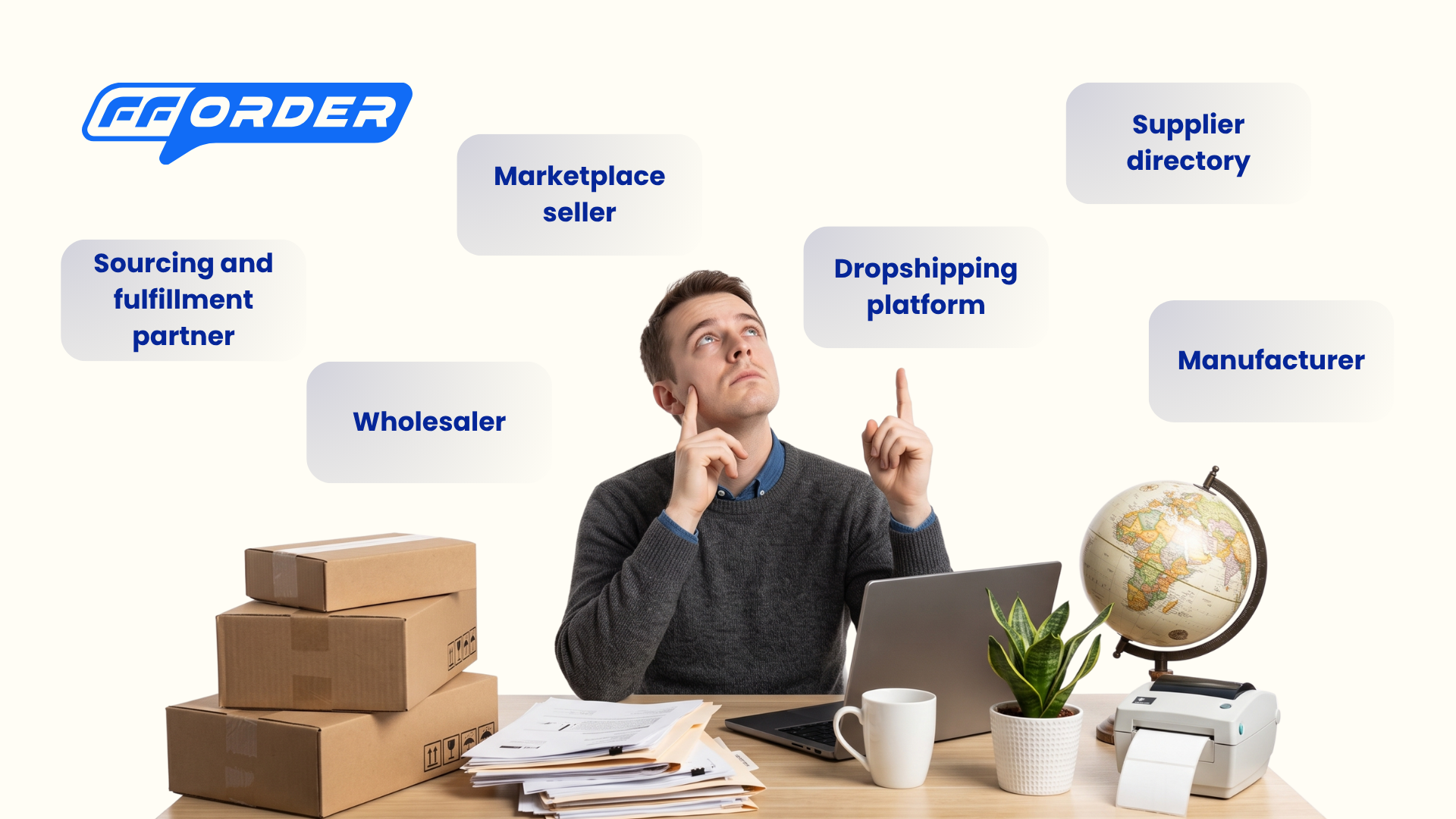
The word “supplier” hides several business models. Before comparing prices, identify who makes the product, who owns the stock and who will handle the customer order.
- Manufacturer: Produces the item. This route offers more control over materials, features and packaging, but production MOQs usually apply.
- Wholesaler: Buys finished goods and resells them, often across several categories. Ready stock and smaller quantities are common advantages; manufacturing control is limited.
- Marketplace seller: Lists products on AliExpress, Alibaba or a similar marketplace. The account may belong to a factory, trader, wholesaler or another reseller. Do not assume which one.
- Supplier directory: Helps buyers discover and contact suppliers. Some directories screen listings, but they do not necessarily manage inventory, orders or disputes.
- Dropshipping platform: Connects products to a store and may automate imports, stock updates, order forwarding and tracking. The underlying supplier still determines much of the product and delivery performance.
- Sourcing and fulfillment partner: Coordinates procurement, QC, inventory, packaging and delivery. This becomes relevant whenever the seller needs more control across those handoffs.
There is no best model in isolation. The right one depends on the product and on how much operational responsibility the seller wants to keep.
Seven Ways to Find Dropshipping Suppliers
Different channels solve different parts of the search. Use the one that matches the product and the amount of work you are prepared to manage.
1、Dropshipping Apps and Platforms
This is the fastest route from product search to store listing. Many platforms provide a catalog and automate imports, orders, inventory updates and tracking. That convenience is useful during testing. It can also hide variation between the suppliers underneath, so check the actual product source, warehouse and fulfillment terms.
2、Supplier Directories
Directories such as SaleHoo and Worldwide Brands are built for discovery. They can narrow a search by product or region and may screen companies before listing them. That saves time, not due diligence. Current stock, samples, pricing, returns and shipping performance still need to be checked with the supplier.
3、AliExpress, Alibaba, and 1688
These platforms should not be treated as interchangeable. AliExpress is convenient for individual purchases and early tests. Alibaba is oriented more toward B2B quotations, manufacturer contact and larger orders. 1688 serves China’s domestic market; buyers may need support with Chinese communication, RMB payments, consolidation and export arrangements.
4、Google Search
Google often surfaces niche manufacturers and regional wholesalers that never appear in large directories. Use the product, location and supplier type in the same query: eco-friendly kitchenware wholesaler UK or private label pet products manufacturer, for example. A dated website is not proof of a weak supplier. A polished one is not proof of a strong supplier either.
5、Contact Manufacturers Directly
Direct contact is worth considering when the product specification is clear or customization matters. It gives the buyer closer access to materials, packaging and repeat production. It also moves more work onto the buyer: samples, MOQs, production follow-up, inspection, inventory planning and freight all need owners.
6、Trade Shows
A trade show puts products and suppliers in the same room. Buyers can inspect samples, compare categories and discuss customization face to face. The cost is higher than an online search, and a confident booth conversation is not a substitute for checking the company, factory and order terms afterward.
7、Sourcing Agents or Managed Partners
A managed partner is useful when the problem is no longer finding a listing. The work may include supplier communication, samples, production, QC, packaging, inventory and shipping. The extra service has a cost, so scope and responsibility must be explicit. This model suits projects that need operating control more than casual catalog browsing.
How to Verify a Dropshipping Supplier
Ignore how established the website looks for a moment. Ask for information that can be checked.

- Match the legal and payment details. Compare the registered company name and address with the contract, invoice and receiving account. If the money goes elsewhere, get the relationship in writing.
- Identify the actual business model. Is the company a manufacturer, a wholesaler holding stock or another dropshipper forwarding orders? The answer changes what it can control.
- Test the inventory claim. Ask where the goods are stored, how often stock updates and what happens when an item sells out after a customer has paid. If an app shows a number, find out where that number comes from.
- Break down the price. Separate product, shipping, transaction, packaging, handling and subscription charges. Ask when each component can change.
- Buy a sample. Check the product, parcel, dispatch time, first carrier scan and final delivery. A product photo does not test the fulfillment process.
- Run the order connection. Confirm how the supplier receives an order and how tracking returns to the store. Test the manual exceptions before trusting automation.
- Check each market separately. Warehouse, route and carrier options can change by country. One delivery estimate should not be copied across every destination.
- Read the failure terms. Damaged goods, wrong items, lost parcels, returns and reshipments need written rules. A return address alone does not tell you who pays.
- Clarify branding and capacity. Confirm packaging MOQ, production time, storage terms and ownership of unused materials. Ask what changes when daily volume rises.
Verification is not about finding a supplier that sounds professional. It is about knowing what the supplier can prove—and what it will do when an order goes wrong.
Order Samples and Run a Real Shipping Test
A sample should travel through the process you expect customers to experience. Otherwise, it only tests the object inside the box.

Compare the item with its listing. Check material, dimensions, color, finish, included parts and basic functions. Record small substitutions; they tend to matter more when repeated across a larger order.
Then inspect the parcel. Was the product protected properly? Did the supplier add an invoice, logo, discount card or other material that exposes the source? Generic packaging may be acceptable during a test. Unexpected supplier promotion usually is not.
Separate the timeline into three parts:
- Order submitted to tracking number issued
- Tracking number issued to first carrier scan
- First carrier scan to final delivery
This prevents a seven-day transit estimate from disguising four uncounted days in processing.
Compare the final charge with the quote, including handling, taxes and remote-area fees. If the parcel is damaged, use the incident to test response time, evidence requirements and the refund or replacement process.
Repeat the test in the markets that matter. A clean US delivery does not establish customs, carrier or last-mile performance in Europe, Australia or Latin America.
Compare Total Cost, Not Unit Price
The cheapest listing is not always the cheapest order. A low product price can be offset by shipping, handling or a replacement policy that fails when needed.
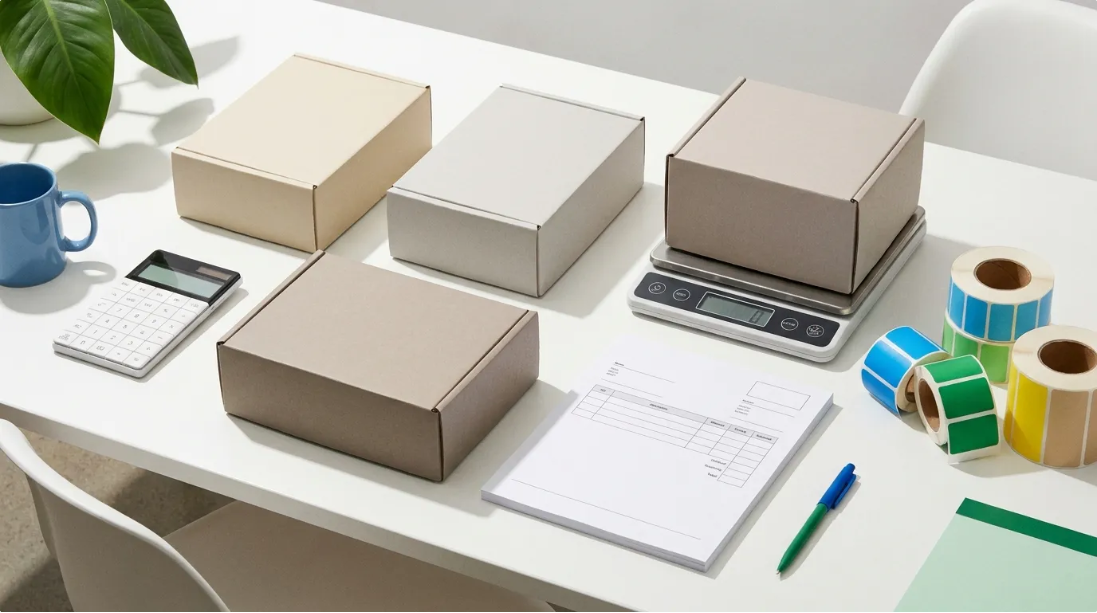
Use one cost line for every supplier:
Product cost + shipping + transaction fees + packaging + returns + refunds + replacement cost
Compare test orders going to the same destination. Some suppliers recover margin through shipping rather than the item price. A platform may offer a free account while charging for products, automation, packaging, storage or other services. “Free” describes the account or entry point—not the physical supply chain.
Returns deserve their own line. Where does the item go? Can it be inspected or restocked? Who pays when it is damaged, incorrect or lost? A clear reshipment policy may be worth more than a small saving on the unit price.
Slow delivery creates cost as well. Refund requests, chargebacks and repeated support messages do not appear on the supplier invoice, but the seller still absorbs them.
There is no need for an elaborate model. Use the same destination, order conditions and cost template. The purpose is simply to stop comparing a product price from one supplier with a landed cost from another.
How to Manage More Than One Supplier
More suppliers can widen the catalog and provide a fallback when one source runs out of stock. They also create more ways for one customer order to fragment.
A mixed order may leave in two or three parcels, each with its own dispatch date, carrier and tracking number. Inventory feeds can update at different times or use incompatible SKU formats. Packaging changes from item to item. Returns and lost parcels fall under different rules. The customer receives the mess as several notifications, several delivery dates and, sometimes, several shipping charges.
Give every SKU a primary supplier and a tested backup. Do not switch only because the second source shows a lower price. The replacement must match the product version, stock status, landed cost and expected delivery.
Standardize the data each supplier provides: SKU, quantity available, handling time, shipping method, tracking format, packaging requirement and exception contact. Decide in advance whether a multi-item order will split, wait for consolidation or trigger a customer message.
Multiple suppliers reduce dependence on one source. Without common operating rules, they simply divide inventory, tracking and after-sales responsibility across more places.
When to Move Beyond a Catalog Supplier
A catalog supplier is useful when speed and product access matter most. It becomes less comfortable when supply problems begin shaping the customer experience.
Frequent stockouts are one sign. Unannounced product changes, inconsistent batches and later orders that no longer match the sample are others. Private or safety stock may become more reliable than a marketplace availability number.
Branding adds another layer. Labels, inserts and custom packaging have their own specifications, production time, inventory and replenishment needs. QC matters differently when one defect can repeat across many customer orders. Add several suppliers, warehouses and carriers, and even a simple replacement becomes hard to trace.
At that point, a managed sourcing and fulfillment model may remove unnecessary handoffs. FFOrder can connect sourcing, piece-by-piece inspection for every SKU, private inventory, packaging and order fulfillment in one workflow. Suitability depends on the seller’s operating needs, not on whether the product has reached a prescribed validation stage. If the only requirement is browsing a catalog and testing unrelated products, that depth may not be necessary.
FAQ
How do I find reliable dropshipping suppliers?
Use platforms, directories, focused Google searches, manufacturers and trade shows to build a shortlist. Then verify the business, buy samples, test delivery and read the return terms. A directory listing or strong rating is useful for discovery; it is not proof of current fulfillment performance.
Where can I find free dropshipping suppliers?
AliExpress and some platforms let sellers browse products or open an account without a supplier membership fee. That does not make the supply chain free. Products, shipping, transactions, automation, packaging, storage and sourcing services may still carry charges.
Is Alibaba good for dropshipping?
Alibaba is useful for contacting manufacturers, wholesalers and trading companies, especially when customization or repeat purchasing matters. Not every listing supports single-unit fulfillment. Confirm MOQ, sample policy, stock, processing time, shipping method and whether the supplier can send individual orders directly to customers.
Should I order samples before choosing a supplier?
Yes. A sample reveals the product, packaging, processing time, tracking flow and final delivery. Use the same warehouse and shipping method planned for customer orders. A specially prepared parcel that bypasses the normal operation gives you less useful evidence.
Do dropshipping suppliers require an MOQ?
Some catalog suppliers accept single-unit orders. Manufacturing, private labels, printed packaging and reserved stock often carry separate minimums. MOQ depends on the customer requirement, product, factory, packaging and customization. Confirm each minimum instead of asking for one universal number.
Can I use multiple suppliers in one store?
Yes. It can expand the catalog and reduce reliance on one source, but it may split orders across parcels and delivery dates. Assign primary and backup suppliers by SKU, then align inventory updates, packaging, shipping, tracking and exception rules.
How do I find US or local dropshipping suppliers?
Combine the product, supplier type and location in the search—for example, pet accessories wholesaler USA or home decor dropship distributor California. Check directories, associations, local exhibitions and warehouse-based platforms. Verify that the stock is physically local rather than advertised with local-looking delivery.
Can a dropshipping supplier connect directly to Shopify?
Many supplier apps connect with Shopify to import products, send orders, update inventory and return tracking. Integration depth varies. Test address changes, cancellations, stockouts, partial shipments and tracking updates before relying on the connection for live orders.
FFOrder Team
FFOrder helps growing brands run dropshipping and fulfillment as one system — from sourcing across 40,000+ factories to global shipping and structured after-sales.
Ready for a More Reliable Dropshipping Supply Chain?
FFOrder helps brands source products, inspect every SKU, manage private inventory, customize packaging and fulfill customer orders in one connected workflow.
-1200x628%20(14).png)