
In-House Fulfillment vs. 3PL: Which Is Right for Your Ecommerce Business?
Compare in-house fulfillment and 3PL services across cost, control, scalability and customer experience—then decide which model fits your business today.

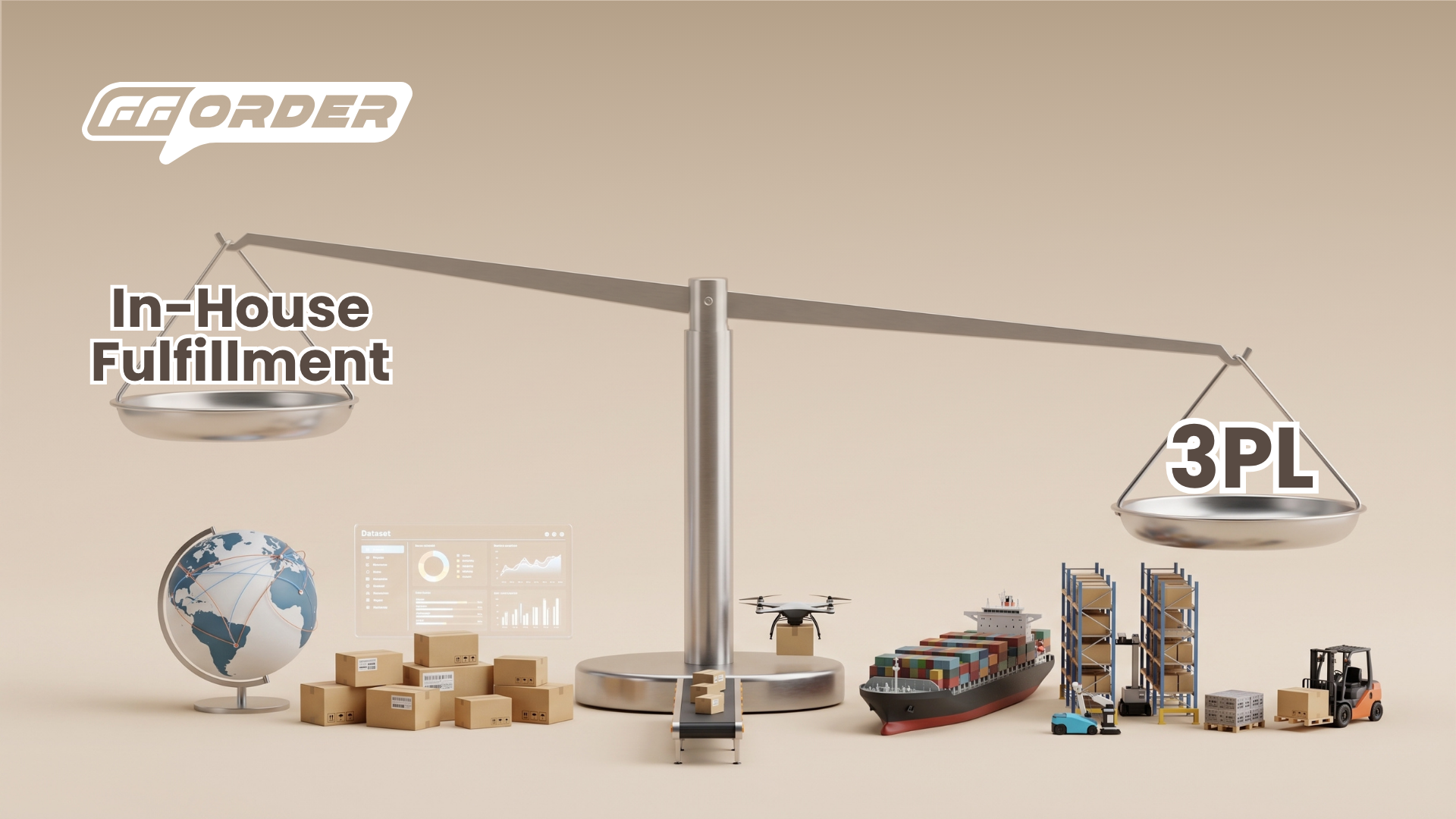
• Understand the operational difference between in-house fulfillment, 3PL fulfillment and hybrid fulfillment.
• Compare direct control, warehouse capacity, labor, technology and market coverage under each model.
• Calculate total fulfillment cost instead of comparing shipping rates or pick-and-pack fees alone.
• Identify the responsibilities that remain with the brand after outsourcing fulfillment.
• Learn when in-house fulfillment is a better fit for a stable and controlled operation.
• Recognize the signs that a 3PL may be needed to support growth, multichannel sales or complex order requirements.
• Use a practical checklist to decide whether to keep fulfillment in-house, outsource it or build a hybrid model.
Compare in-house fulfillment and 3PL services across cost, control, scalability and customer experience—then decide which model fits your business today.
Most ecommerce brands begin by packing their own orders. At a small scale, it keeps stock, packaging and day-to-day decisions close to the team.
That simplicity rarely lasts unchanged. More SKUs, suppliers, channels and packing requirements raise the chance of stock errors, late dispatches and uneven delivery. Fulfillment stops being an end-of-day task and starts shaping the business itself.
The useful question is not whether 3PL is better. It is whether the business needs tighter direct control, more operating capacity, a different cost structure or specialist support.
There is no universal winner. The right model depends on your order profile, product complexity, internal resources and growth plans.
The Short Answer: In-House, 3PL or Hybrid?
In-House Fulfillment
Keeping fulfillment in-house can work well when order volume is steady, products are straightforward and the business already has the space and people to manage inventory and shipping. It gives the team direct control over packing, priorities and customer experience.
The trade-off is that the business also carries the fixed costs, staffing pressure and responsibility for expanding the operation when demand changes.
3PL Fulfillment
A 3PL can make sense when fulfillment is taking time away from the rest of the business. It can add warehouse capacity, operating systems and fulfillment support without requiring the brand to build every part of that capability internally.
Outsourcing does not remove the need for control. It requires clear SOPs, packaging instructions, inventory rules and service expectations. FFOrder supports brands that need this operating layer across sourcing, inventory, fulfillment and delivery—not simply a warehouse to dispatch parcels. Businesses comparing this route can review 3PL fulfillment services alongside their current process.
Hybrid Fulfillment
A hybrid setup keeps some fulfillment work in-house and outsources the parts creating the most pressure. A brand might retain its core market, special orders or high-value products while using a 3PL for new regions, seasonal overflow or standard SKUs.
It can be a sensible middle ground, but only if inventory ownership, order routing and responsibility for exceptions are defined.
The best model is not the one that looks cheapest on paper. It is the one the business can run consistently as order volume, product range and customer expectations change.
What Is In-House Fulfillment?
In-house fulfillment means your team owns the work from inbound delivery to customer dispatch: receiving, storage, inventory records, picking, packing, labels, carrier handoff, returns and exceptions.
Its advantage is immediacy. You can inspect stock, change packing instructions or reprioritize orders without an external handoff. That matters when products need close handling or the process changes often.
The same control brings a long list of responsibilities. Space, people, training, systems and stock accuracy all have to hold up when volume rises. So do shift planning, packing quality and carrier management.

In-house fulfillment gives a brand direct control over daily operations. It also makes the brand responsible for warehouse space, labor, systems, inventory accuracy and service consistency.
What Does a 3PL Handle?
A 3PL takes on agreed operating work after inventory leaves a supplier and before it reaches the customer. The scope often begins with receiving goods, checking quantities and putting stock into storage.
From there, a provider may manage inventory records, process orders, pick products, pack parcels, apply labels and hand shipments to carriers. Many also support kitting, branded packaging, inserts, returns and damaged-stock handling. For ecommerce businesses, the work may include syncing orders from several channels and preparing shipments for a destination market.
The detail matters. One provider may offer simple storage and dispatch; another may handle more complex packaging, order rules and return workflows. For brands sourcing from China, FFOrder can connect inbound receiving, agreed quality checks, inventory and fulfillment in one operating flow. For a broader explanation of the model, see What Is 3PL? A Practical Guide for Ecommerce Brands.
A 3PL does not remove the brand’s responsibility for product standards, inventory planning or customer promises. It carries out the operating work you agree on.
In-House Fulfillment vs. 3PL: The Core Differences
The difference is not simply who packs the order. In-house fulfillment means building and managing the capability yourself. A 3PL means using an external operating partner for agreed warehouse and fulfillment work.
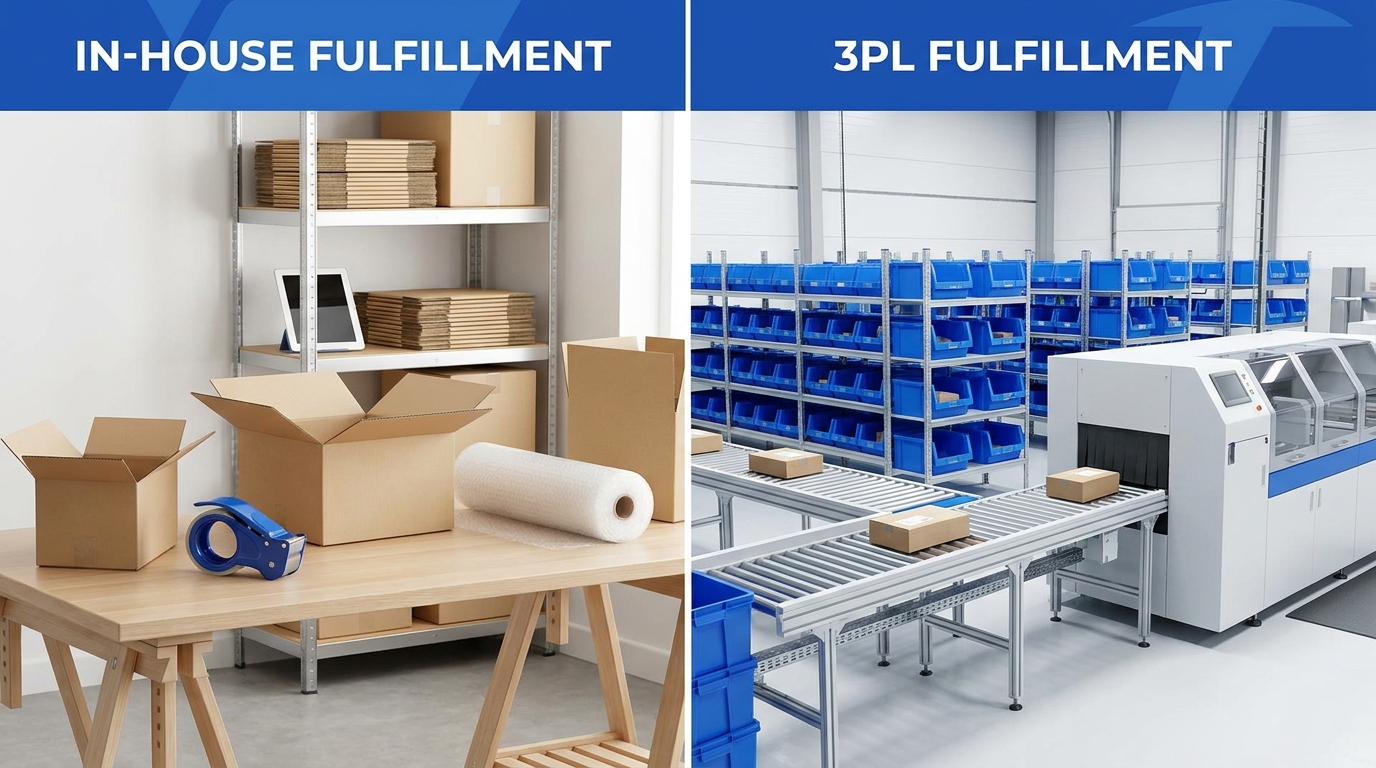
In-house fulfillment gives you direct control. A 3PL can reduce the burden of building and running that capability. Neither model guarantees lower cost or better service on its own.
Cost: Compare Total Cost, Not Just Shipping Rates
The cheapest shipping rate does not automatically produce the lowest fulfillment cost. In-house fulfillment can appear inexpensive when warehouse rent, labor, management time and operational mistakes are absorbed across the business. A 3PL quote can appear higher because each task is shown as a separate charge.
The useful comparison is the full cost of getting an order from inventory to the customer—not one packing fee or shipping rate.
In-House Costs to Consider
- Warehouse rent or the cost of space already used by fulfillment
- Racking, packing stations, equipment and supplies
- Warehouse staff, training, overtime and supervision
- Inventory and order-management systems
- Packaging materials
- Carrier contracts, shipping administration and claims handling
- Returns processing
- Stock discrepancies, damage, unused space and management time
3PL Costs to Consider
- Receiving and inbound handling
- Storage
- Pick and pack
- Packaging materials
- Custom packaging, labeling, inserts and kitting
- Shipping
- Returns handling
- System integrations, account management or special services
- Exception orders and one-off operating requests
A 3PL may make costs easier to see because receiving, storage, fulfillment and special work are priced separately. That does not automatically make it more expensive. In the same way, internal fulfillment does not automatically make costs lower just because they are less visible. For a provider-by-provider view of fulfillment models and cost structures, see 10 Best Ecommerce Fulfillment Companies in 2026.
Compare total operating cost, service level and management burden together. A lower rate in one part of the process can create a higher cost somewhere else.
Control: What Do You Keep, and What Do You Hand Over?
Control is often the reason brands hesitate to outsource. The choice is not between control and no control; it is between supervising the work directly and managing it through clear operating rules.
Direct Control With In-House Fulfillment
With an in-house team, decisions can be applied on the warehouse floor. You can change a packing method, prioritize a group of orders, inspect stock or switch a carrier without waiting for an outside partner to interpret the request.
That responsiveness can be valuable for complex products, frequent packaging changes or detailed customer requirements. It also means the internal team is responsible for making the right call and correcting the result when something goes wrong.
Managed Control With a 3PL
With a 3PL, control relies less on being physically present and more on how clearly the operation is defined. Written SOPs, approved packaging samples, inventory rules and order data give the provider a standard to follow.
The relationship also needs accountability: service expectations, reporting, exception rules, escalation contacts and clear responsibility for damaged, missing or incorrectly fulfilled orders. This is the practical role FFOrder is designed to play: turning the handoff between suppliers, warehouse operations and delivery into an agreed process. Without that structure, a business is not outsourcing fulfillment; it is outsourcing uncertainty.
Outsourcing does not remove control. It changes control from direct supervision to documented standards, data visibility and accountability.
Scalability: Can Your Current Model Handle Growth?
A warehouse can feel manageable right up to the point it is not. Extra orders mean more picks, more parcels, more customer questions and less tolerance for small mistakes. The real test is whether the current setup can grow without weakening inventory accuracy or delivery reliability.
Scaling In-House Fulfillment
Growth can require more storage, staff, training, packing capacity and stronger inventory systems at the same time. Those changes take planning, particularly during a busy period when the team is already under pressure.
New channels, extra SKUs, bundles and branded packaging add another layer. A new market can require new carrier arrangements, new warehouse capacity and a different delivery process—not merely more cartons on the shelf.
Scaling With a 3PL
A 3PL may add warehouse space, labor and operating systems without requiring the brand to build them itself. External capacity should never be assumed. Confirm available space, volume capacity, peak-season planning and the effect of custom packaging, kitting, multi-SKU orders and new channels on pricing or service levels. Brands that source inventory in China can also compare China 3PL providers for ecommerce before deciding where stock should be received and fulfilled.
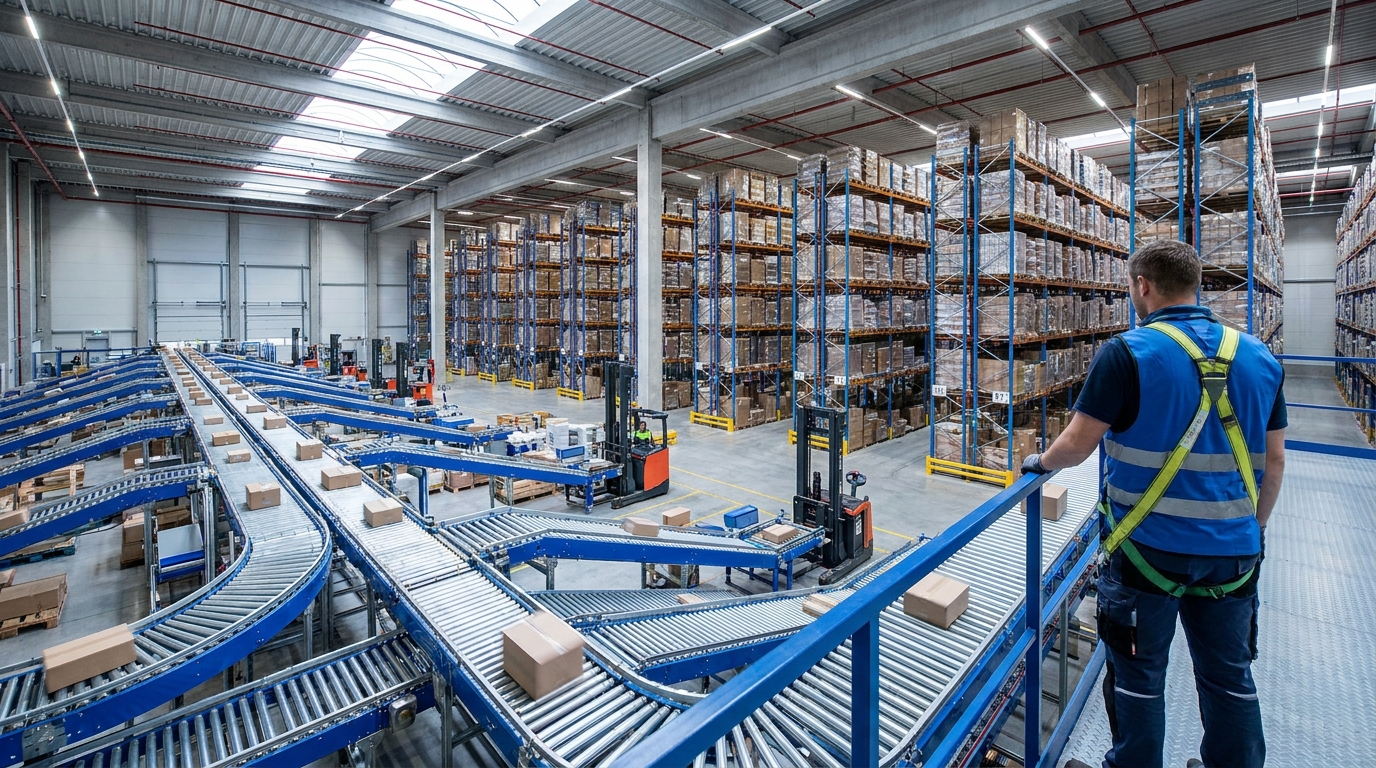
Could your current fulfillment setup handle twice the order volume without creating stock errors, dispatch delays or a worse customer experience?
If the answer is unclear, the issue may be the fulfillment model, not order volume alone.
When In-House Fulfillment Makes Sense
In-house fulfillment can be the right choice when the operation is stable enough to manage directly and the brand has a clear reason to keep the work close.
- Order volume is predictable and the order structure is not complex.
- There are relatively few SKUs, with similar product sizes and packing methods.
- The business has appropriate space and a trained team.
- Products need highly specific inspection, packaging or compliance handling.
- Sales are concentrated in one market.
- The business wants fulfillment to remain a long-term internal capability.
- The team can continue managing inventory, warehouse staff and carrier relationships.
In-house fulfillment makes sense when control is genuinely valuable and the business is prepared to operate fulfillment as a long-term capability—not simply as a temporary workaround.
When a 3PL Makes Sense
A 3PL becomes worth considering when fulfillment starts taking the team away from work only the business can do. If people are spending their days packing orders, checking stock, chasing tracking updates and untangling returns, the constraint is no longer shipping alone. It is operating capacity.
- Product variations, bundles, inserts or packaging requirements are increasing.
- Goods from several suppliers need to be received, checked or combined.
- Multichannel sales make inventory harder to keep aligned.
- Seasonal demand is difficult for the internal team to cover consistently.
- A new market needs to be served without building a warehouse operation first.
- The business needs a more repeatable order, packaging or return process.
- Product, packaging, inventory and exception rules are already defined.
A business using multiple sales channels may also need its order flow to connect with platforms such as Shopify or WooCommerce before it automates fulfillment. For a broader comparison of platform-led fulfillment options, read Best Ecommerce Fulfillment Services Platforms in 2026.
A 3PL is most useful when the business has a process worth handing over—not when it has no process at all.
The Hybrid Model: Keep What Matters, Outsource What Creates Friction
A hybrid model is not a compromise born of indecision. It separates the work that needs close control from the work that is creating avoidable operational drag.
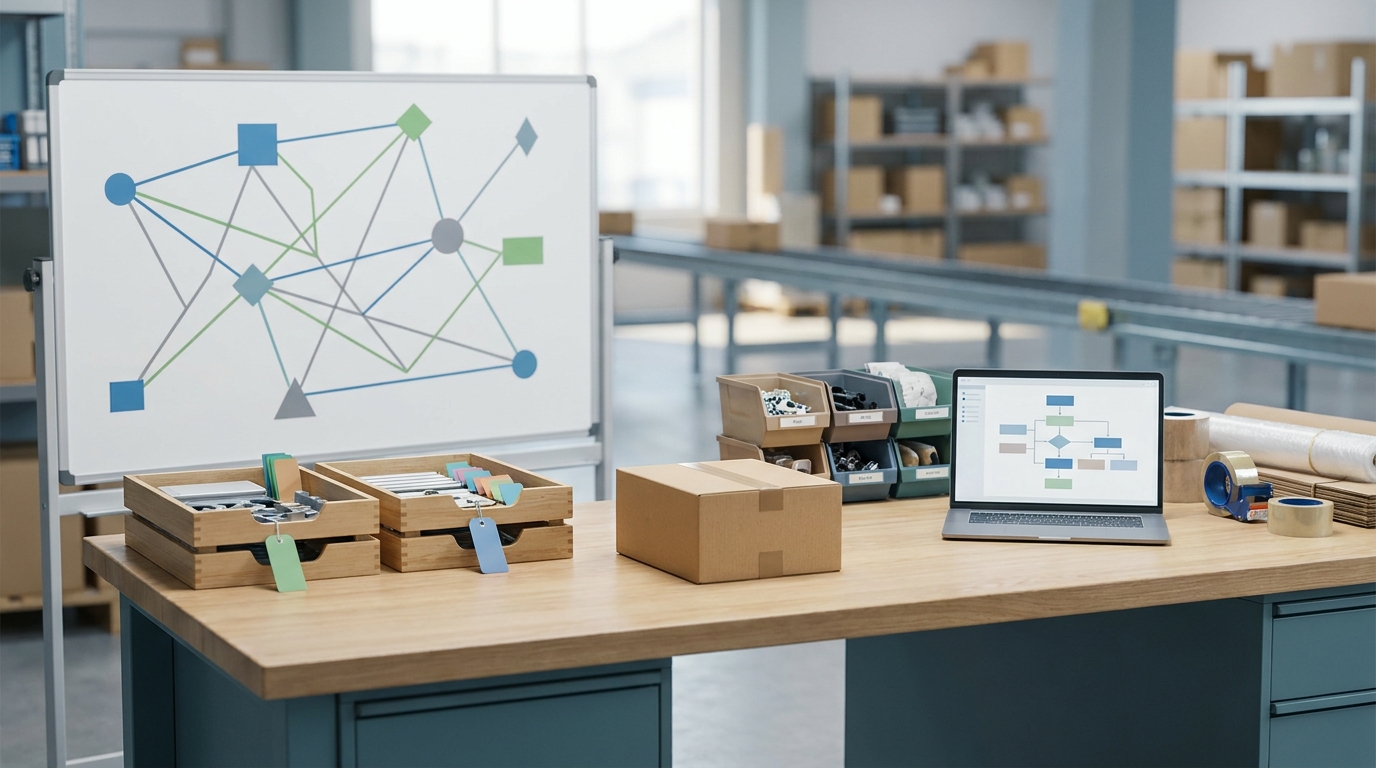
A brand might retain fulfillment in its main market while using a 3PL in a new region. It may keep high-value or heavily customized orders in-house while sending standard SKUs to an external warehouse. Some businesses keep sourcing, product checks and packaging standards close to the brand, then use a partner to execute the agreed fulfillment process. Others handle B2B bulk orders one way and use a 3PL for DTC parcels.
The flexibility is useful only when the handoffs are explicit. Decide where each SKU is stored, which orders follow each route, how channels are allocated, and whether packaging standards stay consistent. Returns, customer-service cases and damaged or missing orders also need a named owner. Where branded inserts, protection or kitting are part of the model, define them alongside the custom packaging workflow rather than treating them as an afterthought.
A hybrid model works when the handoffs are deliberate. If inventory, order routing and responsibility are unclear, it creates two fulfillment problems instead of one.
A Practical Decision Checklist
Use these questions to identify what is actually under strain: capacity, process clarity or a particular part of the operation. They are not a scoring test.
- Does fulfillment take meaningful time away from product, marketing or customer work?
- Can the team handle peak periods without more errors or dispatch delays?
- Do you know the full cost of the current fulfillment operation?
- Is there enough space for the next stage of inventory growth?
- Do inventory records consistently match physical stock?
- Can the current setup support multiple sales channels?
- Do products require kitting, labeling, custom packaging or special handling?
- Are returns and exceptions handled through a clear process?
- Does the business need to serve a new market without opening its own warehouse?
- Are the fulfillment rules clear enough for another operating team to follow?
What Your Answers May Suggest
Your internal process is stable and relatively simple. Keep fulfillment in-house and improve the basics: inventory accuracy, packing standards, carrier performance and peak planning.
Complexity is increasing, but the rules are clear. It may be time to assess a 3PL. You know what needs to happen; the question is whether an external team can execute it consistently.
Some parts work well, while others create friction. A hybrid setup may fit better. Keep the work that needs close control and outsource the work creating capacity, location or operational pressure.
The decision is not about reaching a certain number of “Yes” answers. It is about knowing what your team can manage well—and what needs a different operating model.
Final Takeaway
In-house fulfillment keeps the details close. A 3PL provides operating capacity without asking the business to build every part of it alone. The better choice is the one the team can keep running well as order volume, product range and customer expectations become more demanding.
Before choosing, map the flow of inventory, the order channels, packing requirements, peak-period pressure and exception ownership. With those rules in place, the division of work becomes clearer: what should stay in-house, what can move to a partner and where a hybrid setup is the more practical answer. If you need to apply those choices to direct-to-consumer operations, see DTC Fulfillment: Benefits, Challenges, and Best Practices.
FFOrder Team
FFOrder helps growing brands run dropshipping and fulfillment as one system — from sourcing across 40,000+ factories to global shipping and structured after-sales.
Choose a Fulfillment Model That Can Scale with Your Business
FFOrder helps ecommerce brands connect sourcing, inventory, quality control, branded packaging and global fulfillment in one coordinated workflow—whether you need a dedicated 3PL operation or a more flexible hybrid setup.
-1200x628%20(14).png)