
2026 Practical Guide to Scaling Your Dropshipping Business
Most validated stores plateau between 200 and 2,000 orders/day—rarely because the product stops selling. The real issue: sourcing, warehousing, and post-sale run as separate vendors that don't work as one system. Here's the playbook to consolidate.


Most dropshipping businesses stall between 200 and 2,000 orders/day not from weak marketing or product-market fit, but because sourcing, warehousing, and post-sale live at separate vendors with no shared data or accountability.
Fragmented operations carry a hidden tax of roughly USD 42 per order (about USD 7 from portal-juggling alone)—$252K/month at 200 orders/day, $1.26M/month at 1,000.
Diagnose the break with the three-capability framework (sourcing, warehousing, post-sale), then consolidate into a single supply-chain layer over a structured 4-to-6-week transition.
Most validated stores hit a plateau between 200 and 2,000 orders a day, and it’s rarely because the product stops selling. The real issue is that sourcing, warehousing, and post-sale operations are handled by separate vendors who don’t work together as a single system. This article covers why 200 orders a day is a common sticking point, the real cost of fragmented operations, how to spot which part is breaking down first, and a step-by-step playbook for consolidating operations that has helped many operators move past this barrier in the last two years.
Somewhere between 150 and 300 orders a day, a store that was working stops working. The ad creative still pulls. The funnel still converts. CAC has not blown up. But tracking starts going out late, refund rates drift up two weeks in a row, the support inbox runs a day behind, and the gateway sends one of those carefully worded emails about your dispute ratio.
This isn’t just bad luck or market saturation. It happens when a system built for 50 orders a day is suddenly expected to handle 500, and the supplier isn’t prepared for that jump either. The real challenge between being able to ship and being able to scale is all about the supply chain. That’s what holds back growing dropshipping businesses—not the marketing funnel.
This guide is for operators who have already proven their store works: you have real revenue, a stable SKU mix, a team in place, and now you’re facing the scaling wall. We’ll look at why this is a structural problem, what it costs per order, how to spot where things are breaking down, and what a successful setup looks like in real life.
As the dropshipping business grows, its operating model is splitting in two
The headline numbers are not the story, but they set the stage. Global dropshipping is on track for roughly USD 543 billion in 2026 and crossing USD 1.25 trillion by 2030 at about 22% CAGR, per Grand View Research. Shopify merchants alone moved USD 14.6 billion across the BFCM 2025 weekend, peaking at USD 5.1 million per minute. Dropshipping today accounts for roughly 23% of all online retail sales, and 27% of online retailers run it as their primary fulfillment model.
Underneath those numbers, though, the operating model is splitting into two camps. One side is the single-operator side hustle running on AliExpress or a marketplace agent — under 50 orders a day, low margin, high churn, easy to start, hard to keep. The other side is the institutional cross-border brand: stable peak-season throughput, branded packaging, dedicated account management, integrated WMS, returns that work and customer experience that competes with the marketplaces on delivery speed.
The wall at 200 orders a day sits exactly on the line between those two camps. Crossing it is an architecture decision, not an effort decision. That distinction is the entire point of this piece, and most of the rest follows from it.
Why do 200 orders a day keep showing up
The number is not arbitrary. Several independent failure modes happen to converge around it.
Under 50 orders a day, manual fulfillment still holds together. The operator can paste tracking numbers by hand, work refunds one at a time, and eyeball supplier quality without a real system. GPA Logistics’ inflection-point analysis puts 50/day as the level at which manual processes go from tolerable to unmanageable, and 3,000 orders/month as the floor where 3PL economics start to make sense.
From 50 to about 200, a competent sourcing agent can usually keep things stable — assuming a clean WMS and predictable inbound. Infinite Fulfillment’s analysis of the 3PL transition decision puts it bluntly: “Some brands can stay with an agent up to 200 orders per day without issues if the structure is solid.” What forces the transition is not the order count itself. It is the structural intricacy that comes with it.
Above 200, three pressures stack at the same time. The agent’s warehouse, pick-pack throughput, and account-manager bandwidth were sized for ten clients running at 50 a day, not one client running at 500. Quality drift that was tolerable at low volume turns statistically loud — a 2% defect rate that produced one ticket a week is now producing forty. And the gateway provider starts to pay attention to dispute ratios, which means a single bad week can trigger a hold that pauses the entire business for the next thirty days.
That’s the wall. It doesn’t mean dropshipping stops working—it just means the approach that got you this far can’t scale any further.
What fragmentation actually costs you per order
Most stalled stores are running a chain stitched together from three or more vendors that were each procured separately and never designed to share data: a sourcing platform (AliExpress, CJDropshipping, or a private agent), a fulfillment node (the agent’s warehouse, a regional 3PL, or some hybrid), and a customer support stack (in-house staff plus an outsourced provider plus a helpdesk tool). Each runs on its own portal. Each has its own SLA. Each has its own data model. None of them talks to the others without manual effort.
Parcel Perform’s analysis of fragmented logistics in the AI commerce era puts a number on it. A scaled dropshipping operation typically juggles 7 to 10 different supplier and carrier portals, with operations staff manually copying tracking numbers and order details just to keep one coherent view of the delivery flow. Add up wasted labor, support escalations, refund leakage, and inventory blind spots, and the total infrastructure tax lands at roughly USD 42 per order. About USD 7 of that comes from portal-juggling labor alone.
Let me put numbers on it. At 200 orders a day, $42 of avoidable cost per order works out to $8,400 a day — roughly $252,000 a month coming straight off your contribution margin. At 1,000 orders a day, you're looking at $42,000 a day, or close to $1.26M a month.
Most operators don’t notice this cost because it doesn’t appear as a single line on the P&L. Instead, it’s hidden across customer support staffing, refund expenses, less efficient ads (since repeat and referral rates drop), and payment gateway reserves held due to dispute ratios. Each area seems normal on its own, so finance approves it, and no one raises a red flag.
But the cost is real. Across the operators we work with, this is the single biggest reason scaling dropshipping businesses stall before they reach durable profitability — not ad performance, not product-market fit, not cash. It's the quiet tax that fragmented fulfillment puts on every order, compounding as volume grows.
The three-capability framework: where the chain actually breaks
A supply chain at scale rests on three capabilities — sourcing, warehousing and post-sale. Most stalled stores have all three. The problem is that each one lives at a different vendor with no shared incentives, no shared data, and no shared escalation path. That is what we mean by fragmentation. It looks fine on paper and falls apart in operation.
Capability one: sourcing
Sourcing breaks first because the marketplace dynamic that worked beautifully at low volume actively works against you at scale. USAdrop’s 2026 challenges report lays it out: “When you source from a marketplace (AliExpress, 1688, even some Alibaba suppliers), you’re a tiny buyer with zero negotiating power. The supplier has no reason to favor your 15-unit order over a bulk buyer ordering 5,000 units. So when inventory runs low, guess whose order gets bumped?”
The twist is that at 200 orders a day on a single hero SKU, you are suddenly that bulk buyer — but you are sitting on a marketplace contract that was never designed for the relationship. The factory that fulfills the order has no direct line to you, no QC commitment, no priority allocation, and zero incentive to flag a coming stockout. Quality drift is unmonitored. Customization is impossible. SKU continuity from batch to batch is uncertain. Every reorder cycle is a fresh negotiation that someone else is running on your behalf, and the someone else is optimizing for their margin, not yours.
What scaled operations actually need from the sourcing layer is something different in kind: direct factory relationships with documented MOQs and pricing tiers, a procurement team that can run sample evaluation and OEM tooling against your brand specs, an in-stock library that absorbs demand variance without forcing you to commit inventory, and SKU-level continuity that does not depend on whoever happens to be selling on a marketplace this week.
Capability two: warehousing
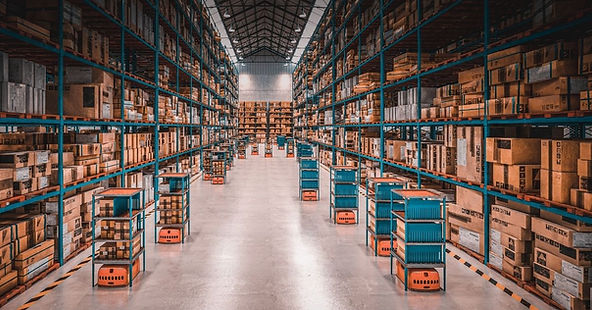
Warehousing breaks second, and it almost always breaks during peak, which is the least favorable moment to find out where the limit is. The agent’s warehouse has the right floor area for 50 to 150 orders a day. At 300, the pick-pack process slows. At 500, accuracy starts to degrade. At 800, the system saturates, and tracking generation lags 36 to 72 hours behind order confirmation. From the customer’s side that looks identical to the brand having stopped shipping, which is exactly how the chargebacks read it.
The deeper issue is not floor space. It is the absence of a warehouse management system that was designed for e-commerce throughput. Most agent-grade warehouses run on spreadsheets and manual sortation. A real ecommerce 3PL runs on a WMS with barcode-driven pick paths, automated sortation belts, real-time inventory sync into the storefront, and instrumented carrier handoff. The gap between those two architectures is invisible at 50 orders a day, as well as existential at 500.
Peak season multiplies the gap. Shopify’s BFCM 2025 numbers are the cleanest illustration: 81 million consumers buying across 96 hours, peaking at USD 5.1 million per minute. A warehouse that cannot absorb a 5x demand spike for one week a year is not a scaling partner. It is a single point of failure with a long fuse.
Capability three: post-sale
Post-sale breaks last, and when it breaks, the brand goes with it. Refunds, replacements, lost packages, customs holds, defective units, shipping disputes — they all land in the support queue. At low volume, the in-house team can resolve them one at a time. At scale, the same volume of issues, even at the same percentage rate, swamps the team, and average response time slides from four hours to four days.
Customers see a brand that doesn’t respond. The payment gateway sees dispute ratios rising above the limit. The team feels burned out. Hiring more support agents won’t solve this, because the real problem isn’t headcount—it’s the lack of structured RMA processes, integrated tracking, and pre-approved refund or replacement options with suppliers.
A real post-sale layer at scale looks like dedicated account management with a documented escalation path, supplier-level commitments to RMA windows and replacement timelines, live tracking integration that flags exceptions before the customer notices them, and a refund / replacement workflow that resolves most cases without manual touch. Anything less compounds into the gateway-ratio problem and eventually into a forced merchant-account migration that costs three to six weeks of revenue while you scramble to onboard a new processor.
How to tell the wall is what you are hitting.
The wall has a recognizable signal pattern. If three or more of these are true at the same time, the bottleneck is supply chain architecture, not marketing or product:
- Tracking number generation is lagging beyond 24 hours on more than 5% of orders.
- Refund rate has crept past 5% and has trended up for two consecutive weeks.
- Customer support time per order is rising even though order volume is flat.
- The most recent peak event (BFCM, Q4, brand sale) caused a measurable capacity failure, you can name.
- The payment gateway has flagged dispute ratios or asked for a higher reserve.
- You cannot negotiate exclusive SKUs, OEM tweaks, or custom packaging with the current supplier.
- You cannot answer “what is in our inventory right now” without manually pinging the supplier.
- More than 7 portals or platforms are in daily use across the operations team.
If you answered yes to most of these, your operation is being held back by its structure. Spending more on ads or testing new creatives won’t help. The architecture needs to change first, and that’s what the rest of this article will cover.
The architecture that compounds: one layer instead of three stitched together
What operators who walked through the wall in the last 24 months actually did, almost without exception, was consolidate the three capabilities into a single supply chain partner with shared data, shared SLAs, and shared accountability. The architecture is no longer agent + warehouse + CS team running in parallel. It is one layer where sourcing decisions, warehousing throughput, and post-sale workflows are visible to the same dashboard and resolved against the same set of commitments.
This is the layer FFOrder is built to be. In practice, it shows up in three observable shapes.
The first shape is sourced as a capability rather than a transaction. The procurement layer operates against a verified network of more than 40,000 partner factories, with directly controlled production capacity in apparel, 3C electronics, beauty, and outdoor. A dedicated 25-person procurement team handles sample evaluation, factory audit, MOQ negotiation, and OEM/ODM tooling — meaning the operator gets factory-grade relationships without staffing a procurement organization in-house. The in-stock library exceeds 1.7 million ready-to-ship SKUs, which is what lets demand variance get absorbed without forcing the operator to commit inventory. SKU continuity across batches, custom branding at low MOQ, and IP protection on private designs all live at this layer instead of being renegotiated transaction by transaction.
The second shape is warehousing as throughput infrastructure rather than floor space. The fulfillment network operates a multi-hub footprint across Zhengzhou, Shenzhen, and Yiwu, with a combined daily processing capacity of 50,000 orders. Around 60% of sortation is automated. Dispatch happens within 24 hours on 98% of orders. The network connects to 100+ international shipping routes with documented delivery performance at 99.8%. That throughput profile is what absorbs a 5x peak-season spike without degrading SLA, which is the difference between a warehouse and a fulfillment system, and the difference shows up exactly when it matters.
The third shape is post-sale as a structured workflow rather than a headcount problem. The post-sale layer is staffed by 100+ dedicated 1:1 account managers, with documented escalation routes, pre-authorized RMA flows for the most common exception categories, and tracking integration that flags shipping anomalies before the customer raises a ticket. Multilingual customer support spans the operator’s primary markets. The result is a refund / replacement workflow that closes most cases without operator intervention and protects the gateway dispute ratio downstream.
The result isn’t just a faster supply chain—it’s a whole new level of supply chain. About 110,000 corporate clients worldwide now use this setup, including businesses that scaled from 100 to 1,000 orders a day in one peak season. For a real example of how this works during a busy season, check out The Peak-Season Progress Journey of a U.S. Kids Swimwear Seller.
The 4-to-6-week transition playbook
Switching from a fragmented setup to an integrated system isn’t something you can do overnight. The operators who succeed treat it as a structured project with clear milestones over four to six weeks. The steps below show what works in practice—and what can go wrong if you rush the process.
Week 1 — Audit. Document the current state across the three capabilities. List every supplier, warehouse, CS tool, and platform in active use. Pull the last 90 days of data on order processing time, refund rate, dispute ratio, and CS response time. Map the SKU portfolio to demand stability — hero SKUs that justify direct factory engagement, mid-tier SKUs that benefit from in-stock library coverage, and long-tail SKUs that should stay flexible. The output of week one is a current-state diagram and a target-state diagram that the leadership team agrees on before any vendor conversation begins. Skip this step, and the rest of the project becomes vendor selection by gut feel, which usually means redoing it inside six months.
Week 2 — Architecture mapping and partner alignment. Translate the target state into a partner brief: required throughput at peak, SLA targets across the three capabilities, integration requirements (storefront, ERP, tracking), and reporting cadence. Run an organized evaluation against two or three integrated supply chain partners. Confirm contractual commitments on dispatch time, delivery rate, RMA windows, and capacity reservation for the next peak. Sign with overlap — never terminate the existing stack until the new one has actually been validated under real volume.
Week 3 — Phased migration on 30% of volume. Cut over the most predictable SKU segment first, typically two or three hero products, which account for the majority of throughput. Run them on the integrated layer for 7 to 10 days while the remaining 70% stays on the legacy stack. Monitor four diagnostic metrics daily: tracking generation latency, refund rate, CS time per order, and gateway dispute ratio. Treat any regression as a blocker, not an instructive moment. Roll back if needed. This is the cheapest moment in the entire project to discover that the new partner cannot deliver.
Weeks 4 and 5 — SKU consolidation and OEM groundwork. With the hero SKUs validated, expand the cutover to the mid-tier segment. Start the OEM and custom packaging conversations on the products that justify the brand investment. Lock in capacity reservation for the next peak event in writing. Decommission the redundant portals and tools — every dollar of fragmentation cost that comes off the per-order math reappears as contribution margin, and that compounding effect is most of the financial case for the move.
Week 6 — Full cutover with overlap retention on long-tail. Move the long-tail to the integrated partner if the economics support it, or retain a single backup vendor for genuine edge cases. Document the new operating cadence — daily dashboards, weekly performance reviews with the account manager, and monthly capacity planning. Most operators who follow this playbook see a measurable margin improvement by week 8 and a structural lift in retention metrics by week 12.
For operators evaluating where a 3PL-style fulfillment layer fits inside this transition, our 3PL fulfillment services overview walks through the warehousing-layer specifics. For the dropshipping-specific architecture across all three capabilities, see our dropshipping solutions page.
FAQ
At what daily order volume should I start the transition?
The real trigger is when your operations become too complex, not just hitting a certain order number. Early warning signs usually show up between 100 and 200 orders a day, and the wall is hard to avoid after 300. If you have a strong agent and a stable SKU mix, you might make it to 200 without issues. But if you have lots of SKUs, big seasonal peaks, or fast growth, it’s better to start the transition around 100 orders a day. Moving early costs little, but moving late can lead to a peak-season failure you won’t forget.
What is the practical difference between a sourcing agent and an integrated supply chain partner?
An agent is a transactional layer that brokers your relationship with a network of independent factories and warehouses. They earn a margin per order. An integrated supply chain partner operates the procurement, warehousing, and post-sale capabilities under a single operational structure with shared SLAs and unified data. They earn margin from the durability of the relationship instead of the number of transactions. At scale, the economic incentive runs in different directions, and the architecture follows.
How long does the full transition typically take?
Four to six weeks for the architecture cutover. Around twelve weeks for the operational cadence to stabilize. Roughly six months for OEM / brand customization work to compound through the catalog. Operators who try to compress the four-to-six-week phase into two weeks tend to manufacture their own peak-season failure. Operators who stretch it past eight weeks usually lose momentum and quietly drift back into the fragmented stack.
Should I cut over all SKUs at once, or phase the migration?
Phase. Almost always. Move hero SKUs first because they are the highest-volume and most predictable to validate. Mid-tier SKUs follow once the hero performance is confirmed. Long-tail SKUs may stay on a backup vendor depending on margin economics. A phased migration protects revenue continuity and gives the operations team a real validation cycle on each segment prior to scaling commitment. We have seen single-shot migrations work; we have also seen them fail spectacularly. The risk-weighted choice is to phase.
Will my payment gateway dispute ratio improve after the transition?
If the dispute ratio is being driven by shipping delays, tracking failures, or post-sale exception handling — which is what is happening for most scaling dropshipping operations — yes. The architecture change is precisely what addresses those root causes. Operators usually see a measurable reduction in dispute rate within 30 to 60 days of cutover, provided the integrated partner is delivering against the documented SLA. Disputes driven by ad-related issues (misleading creative, expectation mismatch on the page) are a separate problem that the supply chain transition does not solve.
How do I measure ROI on the transition?
Three metrics, tracked weekly. Contribution margin per order — fragmentation cost that came off the per-order math should reappear as margin. Repeat purchase rate — better post-sale and faster delivery compound into retention within 60 to 90 days. Peak-season throughput delta — capacity that was the binding constraint becomes elastic, which converts directly into revenue at peak. The contribution-margin signal usually arrives first, retention next, peak revenue lift last.
Do I need to abandon AliExpress or my current agent entirely?
Not necessarily. A pragmatic architecture often retains a flexible vendor for true long-tail or experimental SKUs while consolidating hero and mid-tier products on the integrated partner. The mistake is the inverse — putting long-tail on the integrated layer (where it does not justify the relationship economics) and leaving hero SKUs on the agent (where the wall is unavoidable). Match the SKU segment to the partner type, not the other way around.
What if my product is a one-off seasonal hit and I am not sure it will still be selling in six months?
Then the transition is a different decision. The integrated layer earns its return through duration. If the catalog has a six-month half-life, the legacy stack may actually be the right answer for that specific operation. The diagnostic question is whether you are running a product hit or building a brand. Brand operators almost always benefit from the transition. Product operators sometimes do not, and there is no shame in choosing accordingly.
Key takeaways
The wall at 200 orders a day isn’t caused by marketing or product issues. It’s a supply chain architecture problem, rooted in sourcing, warehousing, and post-sale processes that are split across different vendors with no shared goals. Figuring out which part is breaking first and fixing it at the architectural level is the most important decision a scaling dropshipping operator can make.
Fragmentation adds a real, measurable cost—about $42 per order at scale, according to industry analysis—and it quietly eats into your margins because it’s never listed as a single expense. Bringing sourcing, warehousing, and post-sale together under one integrated partner with shared SLAs, data, and accountability is the key shift that turns a stalled business into one that can grow. That’s the move to make.
The transition should be a structured project over four to six weeks, not a quick switch. Start with your hero SKUs, then move to mid-tier, and finally, long-tail SKUs or keep them with a backup. Track your contribution margin, dispute ratio, and peak throughput every week. Operators who follow this plan usually see better margins by week 8, improved retention by week 12, and more capacity at the next big sales event.
The market is huge—$543 billion in 2026 and heading toward $1.25 trillion by 2030—so the real question isn’t whether there’s an opportunity, but which operating model will capture it. Businesses that move to integrated supply chain layers will win at scale over the next two years. Those sticking with fragmented setups at 200 orders a day likely won’t, and the numbers above explain why.
Considering the transition?
FFOrder operates the integrated supply chain layer that scaling dropshipping operators consolidate onto: a verified network of 40,000+ partner factories, a 25-person procurement team, 1.7 million+ in-stock SKUs, multi-hub warehousing across Zhengzhou, Shenzhen, and Yiwu processing 50,000 orders per day with 60% automation and 24-hour dispatch on 98% of orders, 100+ international shipping routes at 99.8% delivery rate, and 100+ dedicated 1:1 account managers for structured post-sale. 110,000+ corporate clients worldwide operate against this architecture today.
FFOrder Team
FFOrder helps growing brands run dropshipping and fulfillment as one system — from sourcing across 40,000+ factories to global shipping and structured after-sales.
Ready to break through the 200-orders/day wall?
FFOrder consolidates sourcing, warehousing, and post-sale into one layer—40,000+ factories, 50,000 orders/day capacity, and 100+ dedicated account managers—so your dropshipping business scales without the fragmentation tax.
-1200x628%20(14).png)